September 2, 2026
Can Puzzles and Problem-Solving Keep the Mind Engaged?
Key Takeaways
- Puzzles and problem-solving invite concentration, experimentation and the satisfaction of working toward an answer.
- At Claremont Manor in Claremont, CA, a dedicated puzzle room is part of a broader culture of lifelong learning, recreation and resident-led interests.
- Mental engagement does not have to resemble formal study. Sometimes curiosity begins with simply wanting to figure something out.
Why Are We Drawn to Problems We Do Not Need to Solve?
Most of daily life already contains enough problems. Yet people willingly spend hours on crosswords, riddles, strategy games and jigsaw puzzles that have no practical consequence whatsoever.
That may be precisely what makes them enjoyable. A recreational puzzle gives us a problem with boundaries and permission to get things wrong. We can follow an idea, abandon it when it leads nowhere and approach the question differently without much at stake beyond the satisfaction of eventually finding our way through.
The Pleasure of Not Knowing Yet
A good puzzle keeps the answer just beyond immediate reach. Too obvious and there is little reason to continue. Impossible and interest disappears. Somewhere between those extremes lies the productive frustration that makes us lean closer.
Solving something from that position requires more than recalling an answer. We have to notice what we may have overlooked, reconsider our assumptions and remain with the question long enough for another possibility to emerge. The pleasure comes partly from the solution, but also from the process of getting there.
Does Mental Engagement Always Have to Feel Serious?
Play offers a useful alternative. A game does not need to produce anything beyond the experience itself, even when it happens to demand considerable thought. This may be one reason recreational games remain so absorbing: attention is focused on what is happening rather than on whether the activity is accomplishing something measurable.
When Thinking Becomes Social
Problem-solving also changes when another person enters the picture. What began as a private exercise can become collaborative, competitive or conversational. Different approaches become visible, rules create a shared framework and the outcome depends partly on how other people think.
Claremont Manor’s programming reflects that broader relationship between recreation and thought. Poker, Rummikub, Chinese mahjong, bridge and dominoes appear alongside current-events discussions, while the community itself includes a dedicated puzzle room, billiards, shuffleboard and ping pong.
What Does Curiosity Look Like Beyond the Puzzle Table?
Claremont has long had an academic character unusual for a city of its size. The Claremont Colleges are woven into the surrounding area and Claremont Manor sits about a mile from them and half a mile from Claremont Village.
That setting gives lifelong learning a natural local context. At Claremont Manor, visiting speakers from the neighboring colleges complement resident-led groups, cultural outings and other opportunities to explore ideas beyond the community.
Where Do Puzzles Fit Into Life at Claremont Manor?
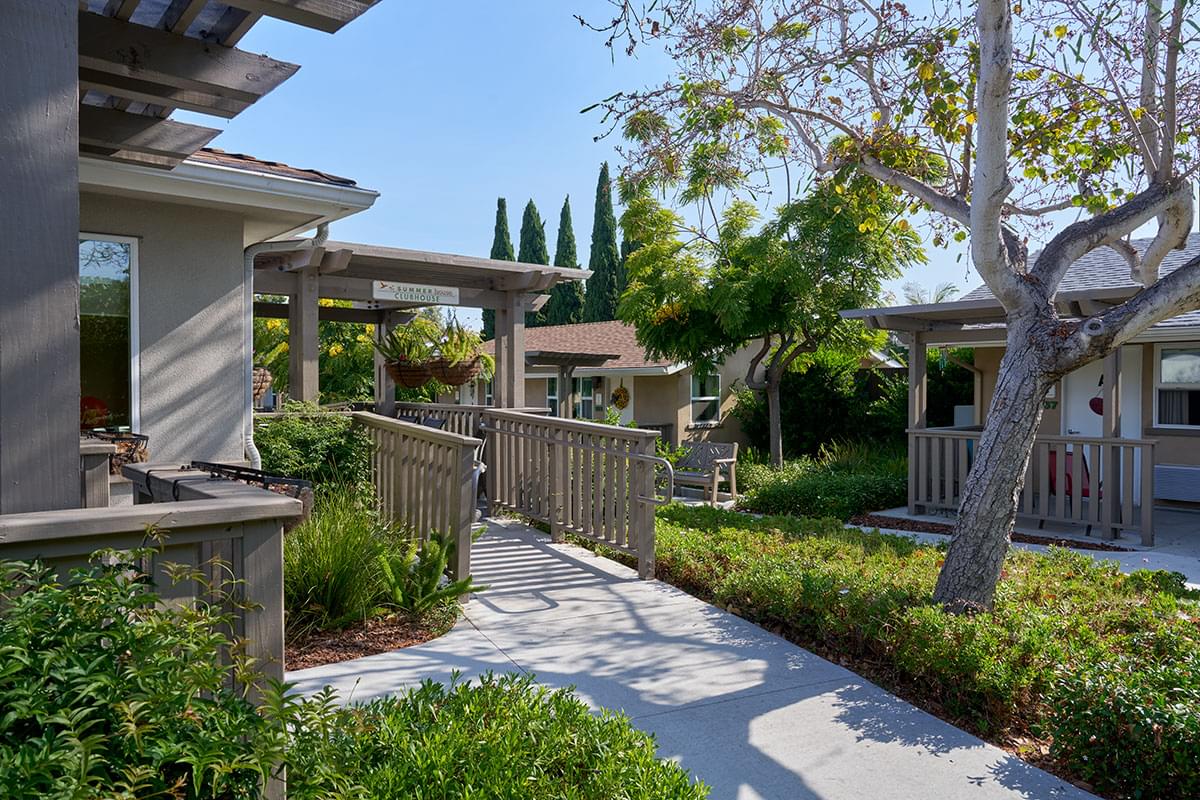
At Claremont Manor, a Front Porch community in Claremont, CA, the puzzle room sits within an environment that includes a library, art studio, game room and resident-run programs. Rather than defining engagement around one activity, these spaces leave room for interests to develop in different directions.
That freedom fits naturally within independent living. With housekeeping, transportation and dining among the everyday responsibilities handled by the community, residents can decide where they would rather direct their time.
For one person, that might mean settling into a difficult puzzle. Someone else may prefer a current-events discussion, an afternoon in the art studio or a guest lecture. The point is not to prescribe the “right” way to remain engaged, but to recognize the value of having worthwhile choices close at hand.
What Keeps Us Coming Back to a Challenge
Perhaps the best argument for puzzles has little to do with what they might accomplish for us. We return because there is pleasure in following a problem far enough to understand it and satisfaction in realizing that something initially confusing has begun to make sense.
That instinct does not belong to any particular stage of life. Puzzles and problem-solving simply give curiosity somewhere to go. Within independent living at Claremont Manor, they exist alongside many other ways of thinking, learning and participating in community life.
FAQs
Q1. What kinds of puzzles and games are available at Claremont Manor?
Claremont Manor has a dedicated puzzle room along with opportunities for card games, Rummikub, billiards, table shuffleboard and ping pong. Sample programming has also included mahjong, bridge, poker and dominoes.
Q2. Does problem-solving have to involve traditional puzzles?
No. Problem-solving can happen through games, discussions, creative pursuits and encounters with unfamiliar ideas. What matters is having something that invites attention, curiosity and thought.
Q3. Are there lifelong learning opportunities at Claremont Manor?
Yes. Lifelong learning at Claremont Manor includes resident-led programs as well as well-being programming featuring guest speakers from the nearby Claremont Colleges.
Read Our Front Porch Blogs
Front Porch in the Media: media highlights and news roundup from June-July 2026
Extending the legacy: the impact of scholarships