
October 15, 2026
Giving the Day Breathing Room Through Music Meditation
Key Takeaways
- Music meditation can give the spaces between commitments a shape and a place of their own.
- Webster House, a Front Porch community in Palo Alto, CA, offers independent living alongside cultural exploration and lifelong learning.
- Having ownership of our time includes deciding how quickly we move from one experience to another.
A conversation can outlast the goodbye. We leave with an idea worth considering, a question unanswered or something we wish we had expressed differently. The encounter has ended, but we have not quite finished with it.
Days contain many such moments. What looks like an empty interval on a calendar may hold the unfinished texture of an experience.
Music meditation can make room for that interval. Between an engagement and whatever follows, music offers time with its own shape.
Why Do the Spaces Between Activities Matter?
We often describe a satisfying day by naming what happened. A stimulating discussion. Progress on a project. An afternoon spent with someone whose company we enjoy.
Less visible is the space that allows those experiences to settle. An interesting conversation may deserve more than an immediate departure into the next obligation. Enjoyment, too, sometimes asks for a little room.
An Experience Can End Before Its Meaning Arrives
Understanding does not always arrive during an event. A remark may become more interesting afterward, when its connection to something else becomes clear.
Leaving space between activities acknowledges that experience has an afterlife. We need not extract a lesson or reach a conclusion. There is simply value in allowing one part of the day to finish without immediately crowding it with another.
Music meditation offers a setting for that passage, giving the interval something more generous than the status of unused time.
How Do You Choose Music That Feels Right?
The best starting point is your own interest. A piece labeled “relaxing” may leave you indifferent, while a recording you have loved for years may invite your full attention.
Familiar Melodies and Unexpected Discoveries
Familiar music offers the pleasure of anticipation. You know when a phrase will return and may hear details that escaped you before.
An unfamiliar piece asks something different: to follow without knowing where it leads.
Try both. Instrumental music may appeal when you want to attend to sound without following words. At other times, a voice may be exactly what draws you in.
You can also change your selection. If a recording feels distracting or brings emotions you would rather not explore that day, choose another or stop. A personal ritual should leave room for preference, including the preference for silence.
Where Can Listening Fit Into Everyday Life?
A practice becomes easier to return to when its place in the day feels natural. Consider when you would welcome a few minutes with music, whether before opening a book or after returning home.
Give the Last Note a Little Space
When the recording ends, wait a moment before starting something else. Notice what stays with you. It might be a phrase you want to hear again or a question about the performer.
If you enjoy writing, a few words in a notebook can mark the experience. You might record the title and one detail you noticed. Over time, those notes can become a record of your changing tastes.
The ritual can remain small. Its value lies in the attention you choose to give it and the pleasure of having something personally meaningful to return to.
How Can Personal Rituals Find a Place at Webster House?
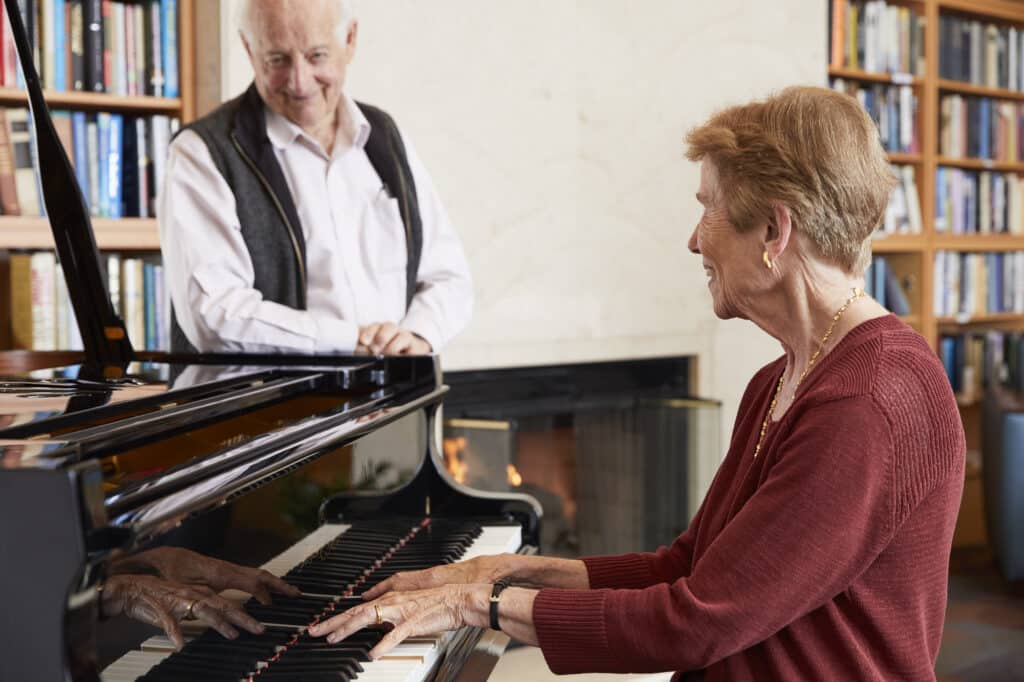
At Webster House, a Front Porch community in Palo Alto, CA, independent living includes a grand piano, a library with a fireplace and opportunities for cultural exploration and lifelong learning. These features provide a setting where music and other personal interests have a place alongside community life.
Listening at Home, Exploring Beyond It
The community’s Webster Street address puts it near University Avenue’s restaurants and shops, with Stanford University nearby. Life in Palo Alto, CA, offers possibilities for an outward-looking day and an evening spent following your own interests at home.
A private music meditation ritual can sit comfortably within that mix. You might become curious about a composer or want to share a recording with a friend. Listening can remain entirely personal, too. Independent living leaves room for both choices.
Discover More at Webster House
Explore Webster House, a Front Porch community and consider how independent living could make room for the interests you want to pursue. Learn about its cultural opportunities, shared spaces and neighborhood setting. A conversation with the team can help you imagine where personal rituals, discoveries and meaningful connections might fit into your day.
FAQs
Q1. Do I need musical training to practice music meditation?
No. You can begin by noticing a melody, rhythm or individual sound. Knowing the name of an instrument or understanding musical notation is optional.
Q2. How long should I listen?
One piece is a practical starting point. Choose a length that fits your day and allows you to listen without feeling hurried.
Q3. Can I use music with lyrics?
Yes. Choose music that invites your attention. If you find yourself analyzing the words when you would prefer to focus on sound, try an instrumental recording.
Read Our Front Porch Blogs

Purpose, Perspective, and P.L.U.C.K.: How Joe and Carol Danks Turn Philosophy into Local Impact
Front Porch in the Media: media highlights and news roundup from June-July 2026