October 13, 2026
Episode 14: Never Stop Learning: Lessons in Leadership
Listen On


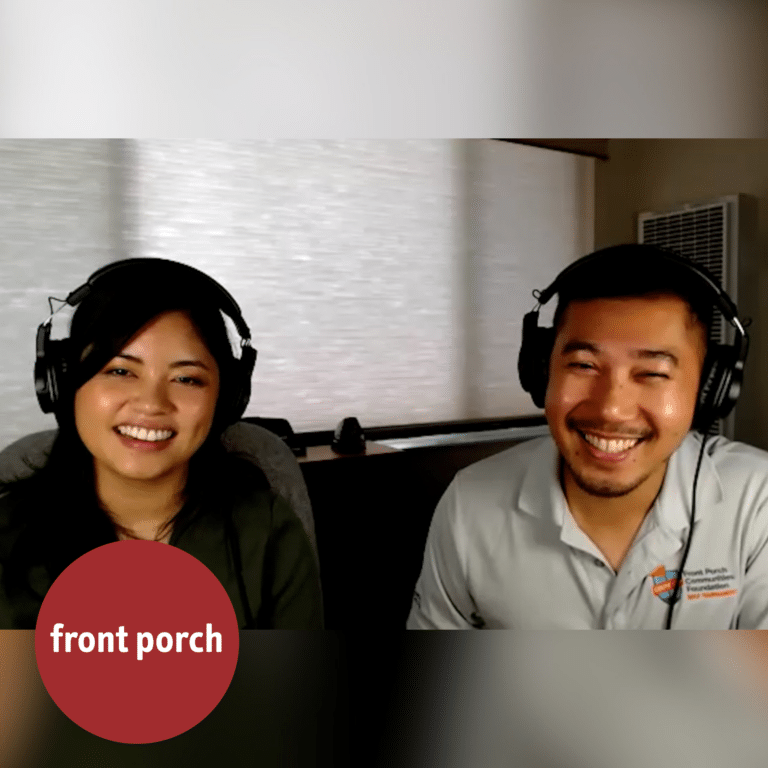
How can we learn to become better leaders? In this episode of The Front Porch Podcast, host Anna Hall talks with San Francisco Towers resident Pete Spencer. Drawing on his 46-year career with the Social Security Administration and his continued service with Front Porch and LeadingAge California, Pete shares lessons about leadership, mentorship, diversity, belonging and the power of bringing people together.
From building community after retirement to learning across generations, Pete advises listeners: keep growing, keep contributing, stay open to new possibilities and opportunities to connect.
Chapters
- 00:39 — The Power of Co-Mentorship: Anna opens with a personal story about mentorship and the realization that the best mentoring relationships can become reciprocal. She introduces Pete Spencer and his belief in learning, connection and mentorship across generations.
- 02:55 — Meet Pete Spencer: Pete’s journey spans a 46-year career with the Social Security Administration and leadership roles at San Francisco Towers, Front Porch and LeadingAge California.
- 05:12 — Finding Belonging in Community: Pete explains why belonging is so important when moving into a senior living community and why there is no single right way to participate. Community can offer both abundant opportunities for engagement and space for solitude.
- 06:18 — Choosing San Francisco Towers: Pete shares how his wife, Jo Ann, encouraged them to plan ahead and make the move while they could fully enjoy the experience. The conversation challenges the idea of waiting until you are “ready” to embrace community living.
- 07:32 — From Busy-Making to Meaning-Making: Anna and Pete discuss why community life should be about more than filling a calendar. At its best, Life Enrichment creates opportunities to connect, contribute, learn and create something meaningful.
- 09:07 — Purpose, Connection and the Men’s Dinner: Pete reflects on discovering that connection is central to his sense of purpose. He shares how the San Francisco Towers Men’s Dinner grew from a response to social isolation into a thriving weekly gathering.
- 10:59 — Giving Residents a Voice: Pete discusses the evolving role of Front Porch Resident Representatives and the importance of listening to the experience, knowledge and ideas residents bring to the organization.
- 12:52 — A Career, a Calling and a Love Story: Pete looks back on the “temporary” Social Security job that became a 46-year career—and tells the story of meeting his wife, Jo Ann, after driving across the country to Baltimore.
- 15:22 — Why Diversity Makes Us Stronger: Pete shares how he championed diversity at the Social Security Administration, including creating advisory councils and opportunities for people from different backgrounds to be heard and represented.
- 17:19 — Never Stop Learning: Looking back on his career, Pete says one principle stands out: he never stopped learning. His favorite part of leadership was connecting directly with people, hearing their stories and continually asking how things could be better.
- 18:29 — Optimism, Resilience and Pete’s Family Story: Pete traces his optimism to his parents, who rebuilt their lives in California to support his education and continued exploring new possibilities later in life. He also shares the remarkable story of his father surviving the attack on Pearl Harbor.
- 21:47 — Leadership Through Mentorship: Pete explains why mentors do not always need a formal title—and why everyone benefits from having a personal “board of directors.” The most valuable mentors are often the people willing to tell us the truth, even when it hurts.
- 23:24 — Why Mentors Learn, Too: Mentoring is not a one-way relationship. Pete describes how mentors learn from the people they advise and why understanding another person’s challenges can make us better leaders ourselves.
- 24:03 — What’s Next for Pete?: Pete discusses his continued work with LeadingAge California and his belief that meaningful change requires organizations and individuals to work together.
- 25:32 — Lead From Your Mission and Values: Pete offers leadership advice centered on returning to fundamentals: mission, values, purpose and connection. He closes with a reminder that belonging requires inclusion—and that organizations are stronger when the people within them reflect the people they serve.
Key Takeaways
- Belonging does not require everyone to participate in the same way. A strong community creates opportunities for connection while respecting each person’s individual needs and preferences.
- Purpose can continue evolving throughout life. Aging can bring new opportunities to contribute, build relationships, create and discover what matters most.
- Community should foster meaning, not simply offer activities. The goal is not to keep people busy, but to create environments where they can connect, learn, contribute and flourish.
- Great leaders listen. Pete’s approach to leadership centers on hearing people’s experiences, valuing their knowledge and involving them in decisions that affect their lives.
- Diversity makes organizations stronger. Different backgrounds, experiences, talents and perspectives allow communities to better understand and serve the people around them.
- Mentorship is most powerful when it is reciprocal. Mentors learn from mentees, and the strongest relationships allow both people to be honest, vulnerable and open to growth.
- You need more than one mentor. Pete recommends building a personal “board of directors”—a group of trusted people who bring different perspectives, including someone you can depend on to tell you the truth.
- Leadership starts with fundamentals. When challenges arise, returning to an organization’s mission, values, purpose and principles can provide clarity about the right path forward.
Guest Bio
Raised in Iowa, Pete Spencer first moved to California before his senior year in high school. After college, Pete spent his 46-year career working for the Social Security Administration, primarily at the headquarters in Maryland and at the San Francisco regional office where he led 6800 employees. Pete and his wife Jo Ann moved to San Francisco Towers six years ago. Since then, Pete has been actively involved at all levels of leadership, including as a resident representative, elected member of the Front Porch Board of Directors, LeadingAge California board member and facilitator of the community’s Men’s Group.
Host Bio
Anna Hall is a purpose-driven leader with over 25 years in senior living, spanning employee engagement, life enrichment, training and innovation in age-tech and program design. A certified life coach and dynamic speaker, she helps people connect with meaning and motivation at every stage of life. She is the creator of The Purpose Equation®, an evidence-informed framework that empowers individuals to define and activate their unique purpose to enhance wellbeing, engagement and collaboration. As Chief Culture & Community Officer at Front Porch Communities & Services, Anna leads initiatives that foster belonging, creativity and human thriving—building communities where everyone feels valued and inspired to make a difference.
Resources Mentioned
- Front Porch Communities and Services — A nonprofit organization providing senior living communities, affordable housing communities and other programs and services.
- San Francisco Towers — A Front Porch senior living community located in San Francisco, California.
- LeadingAge California — An association representing nonprofit providers serving older adults in California; Pete serves on its board.
If this conversation resonated with you, share it with a friend, subscribe and leave a review to help others discover the show.
Listen On
Disclaimer
The views and opinions expressed on this podcast are those of the speakers and do not necessarily reflect the views or positions of any entities they represent. This podcast is for informational purposes only and should not be considered, legal, health, tax, or professional advice. Always consult a licensed professional for specific advice related to your situation.
Anna Hall: We’re taught from a young age to value independence. But what if our true strength is our ability to connect with others? Through conversations with the fascinating folk who live and work at Front Porch Communities and Services, we explore how community shapes us, how we can learn from people in every stage of life, and how each of us makes an impact in our own communities and beyond. Welcome to The Front Porch Podcast. I’m your host, Anna Hall.
I joined a networking group in the aging services space, and I was lucky enough to meet a gentleman named Gary Solomonson who is 40 years my senior. And right away, we had a connection, and I made an effort to reach out to him and to stay in touch, because I knew that he had so much experience that I could learn from. And he was so generous with his thinking and with his sharing and with his time, that one day I formally asked him to be my mentor. And lucky for me, he accepted. About a year went by and he called me up and said, Anna, I have an idea, something I’d like to discuss. I think that we are actually co-mentors because we have created a space together where we can both be vulnerable, where we can tell the truth. Where you can tell me when you think I’m off base and I can tell you when I think you might need to change course. And I would like to propose that we are co-mentors. Gary Solomonson, thank you so much for being my co-mentor. I don’t think that my life or career would be where it is without your guidance and truth telling and deep, deep care. And so I would like to invite all of our listeners that if you do not already have someone in your life who is a truth teller, who cares about you with no ulterior motives, to seek out a relationship where there’s a deep synergy and reciprocity. Because that way of learning and connecting in life can literally be life and career changing.
And in this episode, you’ll hear our guest, Pete Spencer, talk about why he is continuing to be a mentor to others in his life, across generations, across peer groups. ‘Cause he knows the power of the and the truth of interconnectivity. So let’s go and learn more from Pete Spencer on the Front Porch Podcast.
Pete Spencer was raised in Iowa and moved to California before his senior year in high school. After college, Pete spent his 46 year career working for the Social Security Administration, where he led 6800 employees. Pete and his wife, Jo Ann moved to San Francisco Towers six years ago. Since then, Pete has been actively involved at all levels of leadership, including as a Resident Representative, elected member of the Front Porch Board of Directors, LeadingAge California board member and facilitator of the community’s Men’s Group. Pete Spencer, welcome to The Front Porch Podcast.
Pete Spencer: Oh my gosh, it’s my honor. And I just feel so great to have a chance to talk with you and be part of this podcast series that has been really a great success, well received everywhere.
Anna Hall Thank you. And, Pete, you’re such an important part of our Front Porch community. I think the first time I met you was on Zoom. You were hosting a resident reps meeting, and I remember your presence, your leadership, your calmness, the way that you kept everybody organized and kept things moving with, I would say, precision and grace. And after that, I just thought I couldn’t wait to meet you in person. And then when I met you in person at San Francisco Towers, you touched my heart.
Pete Spencer: Thank you. You have touched our hearts completely. And I just have to tell everybody a little vignette about when I was with Sean Kelly somewhere in Southern California, and he said, I have to leave now because I have to go find this person and offer her a job, because I’m afraid that if I don’t get there fast, she’ll be gone. So he took off and he made it in time, thankfully, to talk you into joining Front Porch.
Anna Hall: He didn’t have to talk me into it. I was, I couldn’t wait. It was such an amazing opportunity and team with such a vision that aligns so much with my personal vision, of the importance of community, the utmost importance of purpose and joy and and what it means to be a human, living in community and working in community. It was it was alignment from day one.
Pete Spencer: And belonging. Right? That was one of the first things we talked about was belonging.
Anna Hall: Yes.
Pete Spencer: Making sure people know this is where you can belong.
Anna Hall: Pete, why is belonging so important?
Pete Spencer: Because people don’t understand necessarily what community offers them. And the fact that they will be welcomed here. They will all belong here. And they are part of a family.
One of the challenges that people face is obviously, first of all, making the decision to do this. But secondly is when they get here, how do they connect? Where is their spot? You know, in my case, I felt like I was drinking from the fire hose. It was just so much that was available here. Such an abundance of life. And so you make some decisions and you see what makes sense to you and where you can contribute. But the other thing we assure people is you don’t have to jump in and you can also be quiet.
My wife is an introvert, so that was a real challenge for her. Am I going to come to this place where everybody is engaged in every way and so on? Or can I have my quiet time, which I need?
Anna Hall: I believe that your wife was the impetus for your decision to move to San Francisco Towers. Tell us about that.
Pete Spencer: Absolutely. But my wife really did push us to come here. She saw the ability to make a difference in our lives.
Anna Hall: She was also afraid. I believe that if something happened to you, she would be there, with a big house and lots of things to manage.
Pete Spencer: Exactly right. She said, “I know you’ve been so lucky all your life. What’s going to happen is you’ll not have a period of sickness. You’ll just die. You’ll just fall. And then I’ll have the house, and I’ll have all this decision that must be made about what do we keep? What do we not keep? Etc. So I want to do that now and get it out of the way. And we did. People always say “I’m not ready yet.” Well, how do you know when you’re ready? And the fact is, you are ready generally because this is an opportunity to really be part of something. And the sooner you get started, the better it’s going to be. Then I will say, Anna, I hear from people all the time, I should have come earlier. There are so many things going on here in our community, in the other communities that I see in Front Porch that just draw you in because they are exactly what you want to do.
Anna Hall: And I want to be clear when you say there’s so much to do and there so many options, our goal at Front Porch and I know at San Francisco Towers too, it’s not just to fill up the day to be busy. And I always talk about this with our our Life Enrichment professionals. Our job is not busy making. It’s creating an environment for meaning making.
Pete Spencer: Yeah, and getting past that paradigm that’s in the minds of so many people. Are we sitting here watching videos and just, you know, somehow stuck in front of a TV screen?
Anna Hall: Absolutely not.
Pete Spencer: Not at all, not even close. But you have to get over that. And the one way to do that is to come here, sit down and have lunch with us.
Anna Hall: Yes.
Pete Spencer: Have dinner with us. Or spend some other time just talking to us, whoever you are. And you know the other opportunity? If you don’t have it, we can do it!
Anna Hall: Make it! Create it yourself, right?
Pete Spencer: Absolutely.
Anna Hall: Yes.
Pete Spencer: And people are doing that all the time. People here come up with great ideas about things we need to do.
Anna Hall: Great ideas.
Pete Spencer: We have this wonderful new chorus that came out of Lester Lynch, who’s a who’s a wonderful, wonderful singer of his own right. Teaches at the Conservatory of Music, is an operatic singer, is over in Europe singing all the time. And he came here and sat down with our residents and said, “Let’s put this chorus together.” And you know what’s really important about that chorus? It was a group effort. Residents were totally involved.
Anna Hall: So many possibilities.
Pete Spencer: So many possibilities, yeah.
Anna Hall: And that brings us to the Purpose Workshop that I facilitated at the Front Porch Golf tournament.
Pete Spencer: Exactly. That was fabulous.
Anna Hall: Tell me what your experience was like in that workshop.
Pete Spencer: So we went through some exercises to, to actually land on what makes us happy, and then practice those things that get us to joy. So I decided to look at connection as, as a quadrant within all of your boxes.
Anna Hall: Within your ways of being, how you naturally show up in life
Pete Spencer: Exactly.
Anna Hall: without trying, but that also energizes you and makes a positive difference for others.
Pete Spencer: Right. And I and I could have chosen leadership, honestly, because I’m in leadership positions and have been all my life.
Anna Hall: Yes.
Pete Spencer: but I thought connection was more important because we have so many instances in which people find themselves not connected. And if I may I’ll go off on a tangent…
Anna Hall: Please.
Pete Spencer: for a minute about how we created the Men’s Dinner. Front Porch saw coming out of Covid, that they needed to find some way to get people back in to the idea of living in a community
Anna Hall: Yes.
Pete Spencer: and associating with each other. And so Rebecca Johnson led these wonderful, wonderful sessions
Anna Hall: Rebecca Johnson is a leader of creative discovery at Front Porch.
Pete Spencer: And what I heard from some males in those sessions, particularly widowers, was they were no longer connected to anything and they were having a hard time. In particular, because in their situations, other people did the social connections.
So we started our Men’s Dinner, which is for all men, whether you’re married, have a partner or widowed, whatever the case may be. Never been married, whatever. Doesn’t matter. And we get together on Monday nights, and we have dinner together and we have conversation.
And that’s grown over time so that now we have 27, 28 people every Monday night.
Anna Hall: Pete, you and Sean Kelly, our CEO, worked very closely on evolving the role of the resident reps. Could you tell us a little bit more about resident representatives, what their role is, and then what did you do to help transform that relationship with senior leadership?
Pete Spencer: Well, first of all, I have to give all credit to Beth Coye, who was on one of your podcasts.
Anna Hall: Yes she was. Hi Beth.
Pete Spencer: Beth is a junkyard dog, as you know. She gets something. She’s going to go for it.
Anna Hall: She’s gonna get it done.
Pete Spencer: She is. And so all credit to her. She started saying, “Sean, the resident reps are really a powerful group. They can make a big difference and you need to listen to them and involve them.” And so what we try to do is be helpful. Our role… we want we want Front Porch to succeed. We want the aging population to succeed, not just in Front Porch, but around the whole United States of America and in particular, of course, California. And we have a lot of constructive ideas, and we have a lot of people with a lot of backgrounds, as, you know, as you’re continuing to interview other folks and see what their stories are. It’s amazing how much experience there is among these communities. People have done everything. And so taking advantage of that is really important. And that’s what Sean
and the senior leadership team has tried to do.
Anna Hall: You have had an illustrious career and your contributions continue. I don’t think we could ever use the word retirement with you, Pete. In fact, you’re known for wearing a suit every day.
Pete Spencer: I didn’t even wear a tie for this interview.
Anna Hall: I know! I’m like, oh my goodness.
Pete Spencer: I’m gonna be called out by a couple people. You didn’t wear a tie! You always…
Anna Hall: Pete..
Pete Spencer: And I was always called out by Sean Kelly too. Like, “why are you wearing a tie?”
Anna Hall: You showed up so casual for this podcast.
Pete Spencer: Well you know, and I had, yeah…so there you are.
My career started like a lot of people. I needed a job. I knew I was interested in public service, but originally what I wanted to do was work in the United States Information Agency, the Voice of America, fighting the communist regimes. I mean, that was that was where I was coming from. And I had taken Russian language and Russian history and so on. But I had some military to serve, so I couldn’t go in right away. And but I took it what I considered to be a temporary job with Social Security. Then I told them I was leaving, and then they said, well, you you were qualified to be a management intern. So, I said, well, I’ve never lived in Baltimore so I’ll go do that. Again, intending to be there very briefly and then move on.
Anna Hall: So why did you stay?
Pete Spencer: So I drove the 3000 miles. Friend of mine who was a teacher in Watts rode with me. We drove all night. I got to Baltimore, and then I found my wife. I drove 3000 miles to find my wife.
Anna Hall: Tell us more I love love.
Pete Spencer: Okay. Well, I played softball. The other men’s team decided to bring her to pitch against me only. Not against anybody else. They were trying to connect us. Talk about connection.
Anna Hall: Very clever.
Pete Spencer: So they brought her into pitch, and she struck me out!
Anna Hall: Now, were you, were you, were you a good loser?
Pete Spencer: Well, yeah, of course I was. I said, hey that’s it, I’m done. What more can I do? So and they kept yelling at me, keep your eye on the ball and obviously I didn’t. So there you are.
Anna Hall: Pete, I love the way you talk about your wife, Jo Ann
Pete Spencer: Thank you.
Anna Hall: Such respect, such love. And I love how even though you are such an incredible leader, it sounds like you have no problem letting her be the boss. I should rephrase that. She’s the boss and you accept it.
Pete Spencer: That’s right. No, absolutely.
Anna Hall: Yes.
Pete Spencer: Well, first of all, women make such a difference in our society. I mean, look at look at you. Look what you’re doing. Look at the leadership you’re exercising. Look what Beth Coye did and how she had to fight every day
Anna Hall: Every day.
Pete Spencer: Just to establish her position. By the way, the founder of Social Security was really a lady named Frances Perkins. Franklin Delano Roosevelt wanted her to be on his cabinet. And she said, only if you agree to put forward legislation to make Social Security come to life.
Anna Hall: So, Pete, I hear how you understand the importance of diversity and how diversity makes us stronger, better together. What specifically did you do at the Social Security Administration to help grow diversity and appreciation for it?
Pete Spencer: So, I’ll just start with the fact that we serve everyone, we serve everyone. So they need to feel comfortable coming to our offices, talking to us on the phone. If our person has an accent and we’re talking on the phone, that’s good. Because of people who are listening, who have accents as well.
So what we did is we created what are diversity counsels within our organization. So we had a Black Affairs Advisory Council, Hispanic Affairs, Asian American, American Indian. We had veterans. We had LGBTQ. And we had the very first of those in the country. Because I said, if we don’t do it in San Francisco, where will we do it.
Anna Hall: Thank you.
Pete Spencer: We had diversity weekends where employees paid their own hotel rooms and also took vacation time so we could come together at a hotel somewhere in the California region, so we could talk about diversity. That shows you their commitment to this. And I always started every presentation with employees, wherever they may be, that our diversity makes us stronger than we would otherwise be.
Anna Hall: It’s diversity having a mixture of people from different backgrounds and talents. Brains. Right. All of the different ways of being that we bring to the table. And then the result of that, we hope, is belonging. And when people feel that they belong, they stay. They go above and beyond. They make a difference in their own unique way because they feel safe and motivated to do so.
Pete, when you look back at that illustrious part of your career, what stands out the most to you?
Anna Hall: Well, you know, I guess the thing that was so important was I never stopped learning. I ran legislation, so I was on the Hill with Congress continually. I was the CFO and the head of the budget and management. I was the human resources director at one point, which was obviously, actually my favorite job of all.
Anna Hall: I can see why. I can see why.
Pete Spencer: My favorite thing of course, was going to my offices, your offices and talking to our our employees that were there and talking about how they were doing and what we could do better continually, and trying to get to know all of them, as many of them as you can know and their personal stories and their personal families. So here we are. I know there’s a lot of people treading water and saying, “what do I do?” And people get nervous about that and so on. But we have to have faith that things will actually work out, and I think they will in the long run. I mean, I just go back to what was Abraham Lincoln thinking?
Anna Hall: Hmmm.
Pete Spencer: What more of a challenge could you possibly have than that? And so here we are. And we’ll we’ll come out of this, I’m convinced.
Anna Hall: You know, Pete it really strikes me how through all the ups and downs that you have been through in your life, all the challenges of leadership and change, that you continue to be one of the most hopeful, optimistic people I have ever met. And I wonder, does some of that come from your origin story, which has a lot to do with your dad?
Pete Spencer: My mother and father both, actually. They were optimistic people. They were musicians, which is why I was named Peter after Tchaikovsky. I did not fulfill their ambitions about… I was first chair clarinet for a while, but I preferred to be on the football field, broke my collarbone, and that was the end of that.
Anna Hall: First chair clarinet. That’s not too shabby though.
Pete Spencer: But they came out of nothing. They had nothing. And, they were in Iowa. They were going to lose their house. And so they decided we’d better move to California, because we want to get you a year in high school, of high school in California so you can qualify for the UC system, University of California system.
Anna Hall: Wow.
Pete Spencer: Because they could see no way they could finance that themselves. I was actually working here making donuts and they sent me a letter. “Stay there. We’re moving. We’re selling what we have, and we’re coming.” I took the bus back. We all came together. The car broke down, by the way, in the middle of the desert. But that happens. And then so they came and they didn’t know for sure where..
Anna Hall: Wait… in the middle of the desert. How do you get a car fixed in the middle of the desert?
Pete Spencer: You don’t. Not easily. But that’s part of the challenge of being a pioneer, right? So here they came. Always optimistic, always looking about how possibility thinking, how you might possibly get this resolved and so on. And so they did. But you know, coming out of that was the greatest part of their life. And this and this was after they were I was coming into college age. So you can imagine how old they were. And they then had the opportunity as two musicians to run a studio for students teaching accordion. They didn’t play accordion. They never had played accordion. But this accordion studio was for sale, and they bought the studio. And they taught all these students from everywhere, and they had the greatest time because they were able to fulfill that ability that they had in their later life. So you never stop reaching out, trying out something new and being optimistic about what might happen.
Anna Hall: Tell us about your dad. He was a Pearl Harbor survivor.
Pete Spencer: Obviously the invasion occurred. His ship sank, went to the bottom of Pearl Harbor. Thankfully, he swam ashore. The medics gave him something to plug in to people who were still showing some kind of life. So give them something that keep the pain from being too intense. So he went around doing that, and then they waited for the invasion to occur, ‘cause they thought for sure the Japanese would follow it up immediately with a land invasion. And of course they were all trying to be ready for that. So, so again, if he hadn’t survived that, I wouldn’t be here. That was in ‘41. I was born in 45.
Anna Hall: What’s some advice you would give to someone who’s looking for growing their leadership capabilities?
Pete Spencer: Mentorship was always so important. But you know what? A mentor doesn’t have to be a contract you sign. I have talked about having a mentor who’s someone you just observe, You observe them.
Anna Hall: Yes.
Pete Spencer: And you say, I see how they conduct themselves and and also to learn from a negative situation where you say, if I ever have an opportunity to be in that position, I will not do that the way they did that. That was horrible. Also, you don’t just need a mentor, you need a board of directors because no one mentor has all the insights. So have a multiple group of people you can go to, but also have the one person that you can count on to level with you.
Anna Hall: Say the truth even if it hurts.
Pete Spencer: Even if it hurts.
Anna Hall: Yes.
Pete Spencer: How did I do in that presentation? How did I do in that interaction?
Anna Hall: Do you have mentors right now? People you’re mentoring, mentees.
Pete Spencer: I am mentoring people today. It’s very important. And from my perspective, way back when I started, mentorship was key. And my number one mentor was Dr. Arthur Fleming, he was the Secretary of Health, Education and Welfare, president of three universities. And he told me, even, even if you only go sideways, you’re still moving. Just keep moving. Even you may not have advanced the ball immediately, but keep reaching and moving.
Anna Hall: Yes. Make progress. Right?
Pete Spencer: Right, exactly.
Anna Hall: What do you get out of mentoring others?
Pete Spencer: Oh, are you kidding? You’re the winner. You are the winner when you’re the mentor. Absolutely. I mean obviously there’s the satisfaction of seeing other people do well. But you learn. You learn from every one of your mentees. You see what they’re facing and how they’re facing it, and it can cause you also to rethink your advice and how you’re how you’re delivering your advice, because not every situation is the same. And how can you be more profoundly effective in giving that advice and how you can also say just honestly what you did wrong…
Anna Hall: Yes.
Pete Spencer: and what happened.
Anna Hall: Yes.
So Pete, what’s next for you?
Pete Spencer: Well, you know, I’ve always been blessed to have one opportunity after another. And it’s just amazing when I… So when I came here, I didn’t even I did not know about LeadingAge. And somebody came to me and said, “Would you be willing to be considered as a candidate to serve on the board?”
Anna Hall: And LeadingAge is an association of senior living communities across the country. So you’re on the board of LeadingAge California.
Pete Spencer: Exactly.
Pete Spencer: So here we are. We’re the second largest nonprofit in the aging space.
Anna Hall: Yes.
Pete Spencer: I know people don’t like to use the term aging space. What are you talking about? But we’re the second largest in California in the aging space, twelfth largest in the country. I see us as a hyper scaler in particular because we’re moving out. We’re not we’re not standing static. We’re trying to do more. We’re trying to go beyond what would normally be our our boundaries or our charter or whatever, reaching out to other communities similar to us, to say, how do we join ourselves together to make a more profound effect on making the world better for… especially for people who are in the aging population? But I think most of all, the best thing that I can do is to bring other people together to do that. It’s the only way we can handle it. So the point just being you have to connect and bring in other people in order to be successful. One person can be just a little conduit, but everybody else has to really get involved.
Anna Hall: I love that we start to end this episode where we began, which is purpose
Pete Spencer: Right.
Anna Hall: and connection, which really drives you to be the incredible leader that you are.
Pete, I want to be selfish for a minute
Pete Spencer: Okay.
Anna Hall: Because I admire you so much. What advice do you have for me and my role as chief culture and community officer at Front Porch? What should I keep in mind? What should I be thinking about? What could I do better and different?
Pete Spencer: Well, you’re really doing it of course, but I, I think it’s just keep doing what you’re doing. But always be cognizant of what your principles are. What I see happening in organizations all the time is you have to start with what is your mission? What are your values? What is your purpose? What is your connection? Because when things come up as they always do, what I always found in my organization was go back to where your fundamentals are. They will tell you what the answer is. It’s right there before you if you just go back. You know, oftentimes we try to problem solve this individual problem at that moment in time. And we don’t take advantage of all that history we have, where we established what we were here for in the first place. Does what your action proposed do to fulfill what you said was your mission, your values, your purpose, your connection, etc.? And the other thing I would just say is belonging is so important. We have to be inclusive.
Anna Hall: Yes.
Pete Spencer: We cannot be exclusive. So, you know, I did D.E.I. before D.E.I. was D.E.I., okay. We didn’t have a label for it. Maybe that was why we were successful. We brought in people who represented the people we served.
Anna Hall: That warms my heart. That’s what it’s all about. Cause when people feel they belong, the possibilities for what each unique human can bring to this world are, I truly believe, are infinite.
Thank you, Pete. Is there anything else you’d like to share?
Pete Spencer: If I can help in any way elsewhere, wherever you may be, if you’re part of Front Porch or maybe outside of Front Porch in the aging world, I’d be glad to try to do that.
Anna Hall: Pete, your generosity is incomparable. Thank you so much. We are so lucky to have you as a human, your leadership capabilities and your ability to connect people from across communities, geographies, backgrounds together. You make Front Porch better. We are so grateful for you.
Pete Spencer: Well, thank you so much and I’m grateful to all of you, the most blessed person. You’re not gonna find a more blessed person than I am.
Anna Hall: You’ve been listening to The Front Porch podcast. I’m your host, Anna Hall. Our theme music was composed by Geoven Snaer and Dianne Kae Enriquez. Carmen Elena Mitchell is our producer and editor. Our recording engineer is Jeff Gall. Special thanks to Laura Darling, Kate Vermillion and Joanna Aceves for production and marketing support. San Francisco Towers Tech Support provided by Raymond Cheng. Front Porch is a dynamic nonprofit organization dedicated to empowering individuals to live connected and fulfilled lives through community and innovation. In support of this vision, Front Porch provides high quality, accessible and welcoming human services through senior living communities, affordable housing communities, and other programs and services. Learn more at Front Porch.net.
If you enjoyed today’s conversation, please share it with a friend and help others find us by subscribing and leaving a review. We’ll be back soon with more stories from the fascinating folk who live and work at Front Porch. Until then, stay connected and inspired.