December 26, 2025
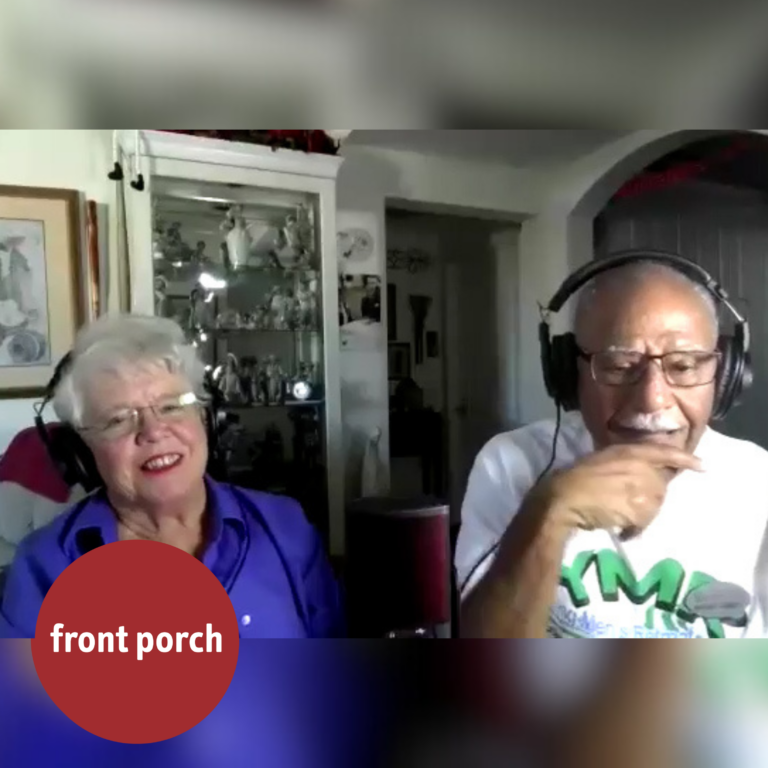
The Front Porch Podcast – Fredericka Manor resident Dorothy Astorga
Episode 2: Building Belonging at Fredericka Manor
Episode Description
From her early years as member of a large migrant family—following the crops from town to town— to her work as teacher, principal, and advocate, Dorothy Astorga has always understood the importance of community in fostering a sense of belonging and purpose. Now, living at Fredericka Manor, she continues her life’s mission of creating community through cultural connections with Fredericka Manor’s Culture Club. In this heartfelt conversation, she reminds us that true community grows when we listen, share and celebrate the many voices that make us who we are.
Chapters
- 00:00–04:00 – Introduction: Purpose and belonging at Front Porch
- 04:00–08:00 – Dorothy’s early life and migrant roots
- 08:00–12:00 – Finding her calling through education & joining the National Teacher Corps
- 12:00–16:00 – Moving to Fredericka Manor & starting the Culture Club
- 16:00–20:00 – The impact of inclusion and diversity on community
- 20:00–24:00 – Finding renewed purpose at Fredericka Manor
- 24:00–End – A life of service
Key Takeaways
- Belonging begins when we see and celebrate the uniqueness in each person.
- Cultural exchange strengthens communities and fosters empathy.
- Lifelong learning and service give meaning at every stage of life.
- Inclusion isn’t just policy — it’s a practice of compassion and curiosity.
- Community is built through shared stories, traditions, and joy.
- We all have something to give — and something to learn.
Host Bio
Anna Hall is a purpose-driven leader with over 25 years in senior living, spanning employee engagement, life enrichment, training and innovation in age-tech and program design. A certified life coach and dynamic speaker, she helps people connect with meaning and motivation at every stage of life.
She is the creator of The Purpose Equation®, an evidence-informed framework that empowers individuals to define and activate their unique purpose to enhance wellbeing, engagement and collaboration.
As Chief Culture & Community Officer at Front Porch Communities & Services, Anna leads initiatives that foster belonging, creativity and human thriving—building communities where everyone feels valued and inspired to make a difference.
Guest Bio
Dorothy Astorga is a lifelong educator, activist and community leader who grew up in a family of migrant farmworkers in California. The first in her family to graduate from college, she went on to serve as a teacher and principal, helping build multicultural and multilingual programs that celebrated diversity. Now a resident of Fredericka Manor, Dorothy leads the Culture Club and teaches Spanish, continuing her lifelong mission to build understanding and inclusion through culture and connection.
Resources Mentioned
- Fredericka Manor – a Front Porch community in Chula Vista, California
- Culture Club at Fredericka Manor – resident-led program celebrating diversity through events, learning, and storytelling
If this conversation resonated, share it with a friend, subscribe and leave a review to help others discover the show.
Disclaimer
The views and opinions expressed on this podcast are those of the speakers and do not necessarily reflect the views or positions of any entities they represent. This podcast is for informational purposes only and should not be considered, legal, health, tax or professional advice. Always consult a licensed professional for specific advice related to your situation.
Anna Hall: Welcome to The Front Porch Podcast. Join us as we uncover the extraordinary stories of people who are part of Front Porch Communities and Services, young professionals just starting their journeys, lifelong learners pursuing new passions and seasoned storytellers sharing the wisdom they’ve gained along the way.
Together, we’ll explore how purpose and community shape us with stories that will inspire you to discover your own unique contribution.
Views expressed by guests on this podcast are the opinion of the speaker, and do not necessarily reflect the views or positions of Front Porch Communities and Services. Please see our show notes for more details.
I’d like to start this episode with a couple quotes from residents who participate in our Sense of Place program that helps us as an organization understand what is it that makes community feel like home.
“People know who I am, and I don’t mean what I’m doing, but understand my personality quirks and they accept me for who I am. And that’s a gift to be comfortable. It’s an existential comfort.”
Another resident said: “The way this community supported me and the multiple significant challenges I faced. People are so sensitive to what you’re going through, what to ask and what not to ask. And it was remarkable to watch people hold me while I was going through that.”
This reminds me of why I’m so excited for this conversation with Dorothy. I met her over lunch when I was visiting the community, and she inspired me with how engaged she is and how much she cares for people living in the community. Residents and team members. And I love her, her personal mission that’s been a golden thread throughout her life, which is not to be served, but to serve. To find ways to contribute. And that speaks to what makes our communities so vibrant. We have people from all walks of life, lived experiences, cultures uniting together as a community. We have retired CEOs, mothers, grandparents, social workers, nurses, activists, teachers and people are bringing, their ideas and their opinions. And sometimes it’s not easy. Sometimes there’s strife, sometimes there’s challenge. And that’s part of life. That’s part of what keeps us interested, engaged. But I know that all of these people and voices uniting together and sharing in this mission to create community where everyone feels they can belong is such a beautiful thing.
And Dorothy is the perfect guest to share what that journey and what that adventure of building community and culture can look like.
Our guest today is Dorothy Astorga, a native Californian who comes from a migrant family of ten. She spent most of her early childhood traveling with other migrant families, following the crops from state to state. She graduated from the University of the Pacific, majoring in administration and supervision of education, then worked as a teacher and administrator. She enjoyed working with parents and students who were new to the United States, and focused on helping them maintain their language and culture as they adapted to their new home. Fluent in English and Spanish. Dorothy lives at Fredericka Manor in Chula Vista, where she teaches Spanish and organizes the Culture Club for her fellow residents.
Dorothy, welcome to the Porch.
Dorothy Astorga: Thank you for inviting me.
Anna Hall: I’m particularly excited for our conversation because we had lunch together at Fredericka Manor a few months ago, and our conversation has stuck in my mind, and it’s really important for us to be able to share your experiences with the world.
So let’s go.
Dorothy Astorga: Let’s go.
Anna Hall: So let’s begin at the beginning. Could you tell us a little bit about your childhood? I think that it shaped a lot of of who you are and how you see the world. So tell us about your beginnings.
Dorothy Astorga: I come from a family of ten and we were basically migrants. I think the first memories I have was, under a fig tree and my mother was starting a fire to heat up the tacos she had prepared early in the morning. We were usually out in the fields by 6:00 in the morning.
Anna Hall: It sounds like you were picking cotton and working at a young age.
Dorothy Astorga: Oh, yeah, It was apples, oranges, lemons, cotton. It was lettuce, celery.
Anna Hall: What was day to day life like?
Dorothy Astorga: We all contribute in one way or the other. We all shared, moving, depending on the crops, what state we went to. And we had like a, I would say, a community where we would be helping each other, whether it was setting up the tents where we lived, whether it was, you know, finding a place where we could cook and, you know, so was sharing a boxcar.
Anna Hall: When you were little, sharing was how you survived.
Dorothy Astorga: That’s right.
Anna Hall: I have to say, it sounds like a hard life. You mentioned setting up tents. I mean, it sounds challenging, yet at the same time, the continuous thread was that you had this sense of community.
Dorothy Astorga: Oh, yeah. To me, it’s always been very much part of my life, throughout my whole life, that we needed to be in the community. We need to be with groups. That we were able to share even babysitting for each other. I think the only thing that kind of, well, I don’t know, it was kind of chaotic was having to go from one school and all of a sudden the next day we’re moving to another school.
I was at the school for a period of time and they had asked me to work on a play to be in a play, and the play was The Princess and the Pea. And, you know, what’s so funny that, you know, it was we worked so hard on trying to put it together, but then we had to move just before we put it on stage.
Anna Hall: Oh, no. You didn’t have your moment.
Dorothy Astorga: I didn’t get to be a princess. Or meet my prince. Though I remember his name. His name is Billy. I mean, that’s one thing that always stuck with me. But it they were very good experiences, you know, growing up and I actually dropped out of school in seventh grade and got married.
Anna Hall: You got married in seventh grade?
Dorothy Astorga: Yes.
Anna Hall: What? What led to that? We have to stop here for a minute. What led to that?
Dorothy Astorga: Well, I think when you grow up in such a situation, you grow up very fast. Yes, I did get married at seventh grade. I don’t say that too often. Number one, it’s not really believed half the time. But that’s all right.
I was fortunate, that my husband was a true believer in education.
One day, he came home with a typewriter and a book for me to learn how to type. And I says what for? He says, you know what You’re too smart, Dorothy. I don’t want you to spend your time working out in the fields, he says. So you need to learn something and you really need to go back to school.
I was a quite an avid reader when I was very young, so that kind of, made me have develop a love for reading, for education. He talked me into going back to night school. I says, well, you know, I don’t have to go to night school. I can just, take a test. I think they said, you can go to the adult school and. No, no, no, no, you need to go to school. So I did go to school. Actually graduated and I was very fortunate because I had, very good mentors. from him, but also from some of the, the teachers that I had and the professors that I had.
I was the only one in my family who actually graduated from school. And I says, I’m going to make sure my kids and my grandkids and thank God they’re all college graduates.
Anna Hall: You’ve paved a path.
Dorothy Astorga: Yep. And one of the professors, when I, when I received my AA, the professor says, Dorothy, there’s a new program at the university, and I want you to apply. I said no, no, no, no, I you know, they have a lot of papers and all that. I’m not going to apply, you know, I’m done. I’m going to see what job I can get. I can type very fast, you know, so no, no, no. He says you’re going to go. And the program is called the National Teacher Corps Program. And then, I said, no, I’m not going. This is, you know, it’s like too hard. You know, I have, you know, I have to work and I have to do this. This is no, no, this is that that man literally took me across the street, help me fill the papers and all that. So I became part of the National Teacher Corps project.
Anna Hall: So you grew up in community. Even though that community moved around, you still have that connection with people. People you cared about, people who cared about you. And then that continued. And did that help grow you into an activist?
Dorothy Astorga: I think it did because I saw a great need, part of the National Teacher Corps program was that you had to work in the community. It also, it made you. Well, it wasn’t easy because we went to school half a day and worked at a school half a day, and in the evenings we worked in the communities.
So it wasn’t, just for them paying our school or what have you, but it was a three year commitment that once you graduated, you would teach in the low income school areas.
Anna Hall: Dorothy, what kind of needs did you see that you felt so compelled to respond to?
Dorothy Astorga: Number one, I been always very close to the migrant community. Because that’s where I came from. The fact that they had to go out in the fields because they there was no other choice. For lack of understanding, I would say as to what the real needs of the kids were. And a lot of it came, I think, from the fact that some of our teachers were not accustomed to working with kids from diverse communities. At one of the schools when I first became a teacher, I set up, again, a culture club. So it, you know, just teaching the kids, you know, you know, even songs and dancing and what have you. I’m bringing pictures of their heroes. And we talked about them. We talked about where they came from.
Anna Hall: So they could see themselves.
Dorothy Astorga: Yes.
Anna Hall: And the schools weren’t meeting that need?
Dorothy Astorga: No
Anna Hall: What was the impact of that need being unmet?
Dorothy Astorga: What they used to say Well, they’re really not college material, you know, ever since that is just so they had other skills and they had other needs first. The first school, I became a principal. It was a challenge, big challenge because it became a multilingual, multicultural school.
Anna Hall: Dorothy, how did you set up a school to meet all of those different needs of the humans and the cultures.
Dorothy Astorga: You have to be very creative. I was fortunate enough, because it was going to be like, it wasn’t a magnet school. It was just a school that was going to be dealing with a multitude of languages, you name it. And with some students who had no experience in school, the Hmongs didn’t even have a written language, I was allowed to hire people that weren’t necessarily already educational system. So that to me was very rewarding. I hired Vietnamese pilot who was born as fluent. He was fluent in French, Vietnamese and English. So I hired people from their community to help me help them.
Anna Hall: That was your strategy.
Dorothy Astorga: That was my strategy. We had Mandarin speaking teachers, Spanish teachers. We had Vietnamese teachers, we had Chinese teachers, we had Filipino teachers, you name it. And most of them had had some training, other ones were just people who were willing to be part of our community.
Anna Hall: Was there a benefit to all of this diversity? All of these different people and backgrounds and languages all in one community?
Dorothy Astorga: Yes. Because I believe, you know, sharing part of your culture is very important. So I was able to celebrate, Cinco de Mayo, the Chinese New Year’s, Vietnamese New Year’s, and we all learned a little bit about that. We learned some of their songs.
Anna Hall: We know that, really important aspects of culture and building culture are to have shared rituals and shared experiences. Is that what you were doing with a lot of intention?
Dorothy Astorga: Yes. Very much so. It makes me emotional. That it really made the kids proud of who they were. Okay. Because in some cultures, you know, we’re, we kind of shy away sometimes, even from our language.
But no the kids, you know, they were fluent in the language and they became fluent in English, they went to college, they graduated.
Anna Hall: Everything that you’re sharing is about the strength of diversity and how it helps people to understand their uniqueness, and also to understand the power of bringing unique individuals together in community to, to uplift everyone. I mean, that’s how we think of community at Front Porch.
Tell us about your experience at Fredericka. You started a culture club there. Tell us what was the precursor to that?
Dorothy Astorga: When I arrived here, I wasn’t a happy camper. Okay, to put it nicely. Number one I did not wish to be to move to a retirement community at all.
Anna Hall: Why not?
Dorothy Astorga: Well, I looked at it as you know, that’s a place for old people. And my daughter turned around and said, mom, you’re old. This is. Which is okay, so this is. No, I don’t want to go there. My husband had just passed, after 73 years of marriage, it was really hard to be, you know, by yourself in a huge house, with my kids, one in Europe, the other one up in Northern California, the other one here. And so the one from here, from San Diego says, I can’t be going up to Los Angeles. If something happens to you, you have to move. You have to move. So they all agreed. I had to move. So when I came here, you know, I said, okay, Dorothy, you’re not too many people of color here, but I spent, I would say, maybe a couple of weeks just what I called having a pity party in my room.
So you know, what am I doing here? You know, you know. You know, I’m. I’m not happy here. I met the young lady who runs Life Enrichment here who encouraged me.
And she said, wouldn’t you like to go help they’re starting a Spanish club? And they really need someone who’s a native speaker. She says wouldn’t you like to go to class as well? I says I’ll go and check it out. But I’m making no commitments. I said, you know, I’ll go and assist. And here I am to two and a half years later teaching Spanish. Not one class, two classes a week.
Anna Hall: Wow.
Dorothy Astorga: So, I think that kind of got me going. I says, okay. It’s all right to be here, there’s a possibility that I can do something here. So this I got this crazy idea. Why don’t I bring cultural activities in here? So then I said, okay, how am I going to start this? Because when you come in being basically an outsider and this is, you know, I’d like to start a culture club, would you come to a meeting? So they come in there.
Number one, it took me forever to get across what culture meant to me.
Anna Hall: How did you, How did you do that? How did you describe it?
Dorothy Astorga: I told them what the objective of the group would be to enhance our cultural understanding and to celebrate the differences and the uniqueness of each resident that lived here, that it was important we got to know each other, because everybody that lives here has a quality within them or has a gift that they can share.
Anna Hall: Dorothy, I have to say, I think that one of your superpowers, and I think you have many, is to see the uniqueness and to celebrate the uniqueness in each individual. That seems to have been a thread that we can pull through your life story that you really, truly see people and then help them see themselves.
Dorothy Astorga: I always look for diversity, and inclusion to me that’s very important. That I like to see an individual as a human that has something to contribute, something I can learn from them and that they can learn from me. And being able to be accepting of our differences.
Anna Hall: Yes.
Dorothy Astorga: At that initial meeting. they says, oh yeah, we can to talk to the kitchen. We can change food. We could have some cultural displays, you know, we can bring movies once a month about different cultures. This is okay, how am I going to do this? How am I going to start this, where they kind of get an idea of what I’m talking about?
So I came up with the idea of having a hoedown.
Anna Hall: A hoedown?
Dorothy Astorga: A hoedown.
Anna Hall: Okay.
Dorothy Astorga: And doing this intentionally, you know, because that’s something they could kind of relate to.
Anna Hall: What is a hoedown look like, exactly?
Dorothy Astorga: It’s called a hoedown because in one part of our country people use the hoe they worked a lot with the hoe as they work with the ground.
Anna Hall: Oh, in the soil.
Dorothy Astorga: That’s right.
Anna Hall: Okay.
Dorothy Astorga: After they came back from working out there, they would have parties in the barn. So that was a means for them to celebrate, you know, to get together as, as a community again.
Anna Hall: Just like you said, building culture and community, celebrations and rituals. This theme continues. I heard hoedown in a Beyoncé song. So I know a little bit about the term, but now I really understand it.
Dorothy Astorga: Where it originated. I do try to do my homework.
You know we have very, very smart residents. They’ll go out and do the research.
Anna Hall: You got to stay on your toes.
So the hoedown went well, then what?
Dorothy Astorga: In any activity that I bring to the community, there has to be an educational part of it. It’s not just bringing in, you know, dancers and just singing and that’s it. No, there has to be a part to it that actually takes place there.
Anna Hall: What’s the thing you’re most proud of that you’ve achieved with the Culture Club so far?
Dorothy Astorga: I think the most I would say the most touching and proud is seeing people who hardly ever left their room come down to the cultural celebrations. And there’s this one gentleman that I’ve known since I first moved here who’s in memory care now. And it’s not cooperating much, participate is the word I would say in anything here. Well, he came to the hoedown. He danced all the time he was there. He was having such a good time. That’s what’s important.
Anna Hall: That’s inclusion.
Dorothy Astorga: That’s inclusion. That’s diversity.
Anna Hall: Yes.
Dorothy Astorga: He’s Latino. To see their happy faces, to see their participation, to see them say, wow, I didn’t know that. I remember once we brought the jazz and blues group to play and all that. And I think, you know, they explained where the music comes from and all that some of the, the residents, as it was over, as they were leaving says, well I won’t have to take my medicine today.
Anna Hall: It’s joy. You’re bringing joy through culture. Yes. Incredible.
How else as this culture club impacted Fredericka Manor? You said that more people are now participating in community. What else are you seeing?
Dorothy Astorga: I would say there seems to be more acceptance of the diversity. I think in our own personal life, and I try to bring things that are that are relevant sometimes even to today. We recently had the children from Ukraine come.
Anna Hall: Oh, Dorothy.
Dorothy Astorga: I mean just it touched their feelings. Touched their heart, okay. Because we had the children singing and the children dancing and the message that they brought with them in their own language. So I mean it, you know, things like that I think are so good for, for, for our community, not only here but everywhere else, you know
Anna Hall: And you’re expanding community by inviting others into community.
What about team members? People who work at Fredericka Manor. How has your Culture Club impacted them?
Dorothy Astorga: I think I can use as an example, when we first celebrated the Day of the Dead. And I saw a lot of pride in them. To me, that also made a big impact on the total community to the point that we have now residents who create their own altar in their own home, and that helped them understand death and the celebration and that we do in other countries, You know, they say, you know, I was able to celebrate the death of my relative. I can do that every year now because now I understand, so it has made an impact. Also in terms of participation as staff, you know, we had for the Day of the Dead, we had some staff members bring pictures for the altar as well.
Anna Hall: An openness to trying new things, to learning.
Dorothy Astorga: It’s like Dorothy learning what What is it this is called? A podcast is.
Anna Hall: You’re doing great. Now you can say you’ve been on a podcast. Add that to your list of achievements.
So you said before that, oh, I don’t want to move into this community of old people. How’s it going now?
Dorothy Astorga: I have to thank the staff. I can’t, you know, I think also the fact that the leadership here has also been very, very wonderful for allowing me to do what I think I can share to the community and their willingness to put up with my craziness. I say but I mean, Ben, who’s director here, and life enrichment has been so supportive and so has the staff even in the kitchen has been, you know, okay, we’re going to do this. Okay. What do you want us to contribute or things like that. So it takes the community, it takes the village to make it work.
Anna Hall: But I also see joy in and how you are an activist and an advocate and a culture builder.
Dorothy Astorga: I am happy here.
Anna Hall: How do you, how do you think about yourself now?
Dorothy Astorga: I was brought up to think, to believe that we are given some gifts in life, and they’re given to us to share.
Anna Hall: Purpose.
Dorothy Astorga: And we’re here to serve, not to be served. One thing I’ve learned here, I think I finally found me.
Anna Hall: How have you found you?
Dorothy Astorga: And I say, I found me because I could say almost I feel free here to share what I have because helping others to me, is also helping myself. When I started teaching Spanish. Yeah, we have a lot of fun in that class, I mean, I’ve had the oldest student, I’ve had was 103 and I think the youngest was maybe in early 80s. Yeah. What can I say I get emotional. So.
Anna Hall: You’re free to be fully yourself. That’s what makes you so beautiful.
Dorothy Astorga: Thank you.
Anna Hall: Would you say something in Spanish to your community members on this podcast?
Dorothy Astorga: Qué les puedo decir? Que tenenos solamente una vida y hay que aprender a vivir.
Anna Hall: What did you say?
Dorothy Astorga: We only have one lifetime. And we need to learn how to live it and share.
Anna Hall: You’re giving other people this path to freedom. To be fully themselves. To embrace who they are uniquely. To share their beautiful language, to speak in their language. To feel that pride. Thank you.
Dorothy Astorga: Thank you.
Anna Hall: You are indeed a culture builder.
Dorothy Astorga: Well, I try.
Anna Hall: We are very lucky that you live at Fredericka Manor as part of our Front Porch community. Wow!
Dorothy Astorga: Thank you.
Anna Hall: Thank you.
You’ve been listening to The Front Porch Podcast. I’m your host, Anna Hall. Our theme music was composed by Geoven Snaer and Diane Kay Enrique. Carmen Elena Mitchell is our producer and editor. Our recording engineer is Jeff Gall. Fredericka Manor tech support provided by Rhonda Hernandez. Special thanks to Laura Darling for production and marketing support. And to Joseph Escobar for our show art design.
The Front Porch Podcast is a production of Front Porch Communities and Services. If you enjoyed today’s conversation, please share it with a friend and help others find us by subscribing and leaving a review. We’ll be back soon with more stories from the fascinating folk who live and work at Front Porch. Until then, stay connected and inspired.
Read Our Front Porch Blogs
Older Americans Month 2026: Championing Your Health at Front Porch
Investing in community: the story of David and Jane Kretzmann