February 27, 2026
Memory Care: How Musical Memories Heal Hearts
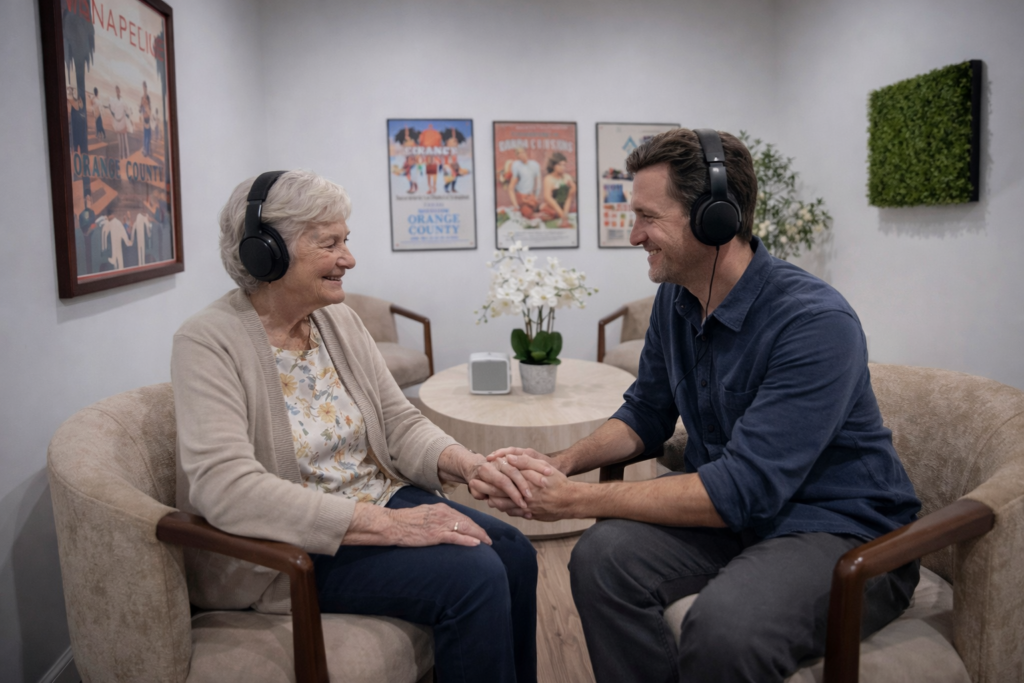
Picture this: your mom, who struggles to remember your name, suddenly lights up and starts singing every word to “Blue Moon,”- a song from her teenage years. Music creates these magical moments for families navigating memory care in Orange County, CA.
Music therapy offers a pathway to connect with loved ones experiencing memory loss, providing emotional bridges when traditional communication methods fail.
People with dementia often preserve their musical memories long after other cognitive abilities fade. These beloved songs do more than bring back memories – they actually stimulate brain functions that support emotional well-being and thinking abilities. Music from someone’s past can open doors to forgotten experiences, creating precious opportunities to enhance the quality of life. Understanding how music works in the brain helps you connect with your loved one in meaningful ways.
How Can I Use Music To Support My Loved One in Memory Care?
You hold more power than you might think. Small steps with music can create beautiful moments of connection with your loved one. Music pathways stay open even when other brain connections fade, giving you a reliable tool for daily care.
Creating a dementia friendly playlist
Think of yourself as a “music detective” – you’re gathering clues about the soundtrack of your loved one’s life. Songs from their teenage years and twenties pack the most emotional punch, so start there. Even people in advanced stages can surprise you by singing along to lyrics they learned decades ago.
Your detective work involves:
- Dig into their formative years – what music defined their youth?
- Skip anything with commercials or interruptions that might confuse them
- Mix different styles, they enjoyed
- Watch their reactions and adjust your collection
Top five songs for 1950s nostalgia
For loved ones who came of age in the 1950s, these classics often spark joy:
- “Blue Suede Shoes” by Elvis Presley – That rhythm gets feet moving
- “Singing in the Rain” by Gene Kelly – Pure happiness in melody form
- “Somewhere Over the Rainbow” by Judy Garland – A timeless favorite that crossed decades
- “I Want to Hold Your Hand” by The Beatles – Simple words about connection
- “What a Wonderful World” by Louis Armstrong – Gentle and hopeful
How do I calm down my husband with Alzheimer’s using music?
Notice when agitation typically happens, then get ahead of it. Calming music playing softly before stressful moments can change everything. Personalized playlists reduce difficult behaviors. Try these approaches:
- Soft background music during challenging activities
- Gentle melodies at mealtimes and bedtime
- Encourage simple movements like clapping or swaying
- Keep other sounds to a minimum
Tips for using headphones or speakers
Each choice offers different benefits. Headphones create a personal music bubble and block distracting sounds, while speakers let you share the experience.
Choose over-ear headphones rather than earbuds for longer listening sessions. Wireless styles work well for seniors, though some find headphones in general bothersome. Whatever you choose, keep the volume comfortable and check for any discomfort. Music should bring joy to both of you.
Why Does Music Stay In The Brain When Memories Fade?
Music holds on when other memories slip away – and there’s real science behind this hope. For families exploring memory care options, understanding why musical memories persist offers both comfort and practical insight into supporting your loved one.
How the brain stores musical memory
Your brain treats musical memories differently from everyday memories. While regular memories depend heavily on the hippocampus, musical memories spread across broader, more diverse brain networks. Scientists have pinpointed a specific “musical memory area” in the ventral pre-supplementary motor area and the caudal anterior cingulate gyrus. These areas light up much more when people hear familiar songs than when they hear new ones.
Here’s what makes musical memories special: they’re stored in abstract form. That’s why you can recognize “Happy Birthday” whether it’s played on piano, sung by children, or hummed quietly. This flexible storage system lives in your auditory cortex, with backup support from brain areas that help identify beloved melodies.
Effect of music on Alzheimer’s brain
The most encouraging news comes from studying how Alzheimer’s affects musical memory. The regions that store musical memories – specifically the caudal anterior cingulate and ventral pre-SMA – rank among the last brain areas damaged by the disease (Matziorinis, A. M., & Koelsch, S., 2022). Brain scans confirm that these regions remain remarkably healthy, showing minimal shrinkage and normal energy use compared to other areas.
This protection explains why someone who no longer recognizes faces can still sing every verse of their wedding song. Even when executive function, speech, and language become impaired, musical responses stay strong. Alzheimer’s typically begins in memory centers and progresses toward the brainstem, leaving musical memory regions protected until very late stages.
The real-world benefits speak for themselves. Music therapy reduces depression and anxiety symptoms, while singing sharpens attention, improves executive function, and helps people remember the names of children and friends.

What Makes Music So Special?
Music opens doors that seemed permanently closed. Melodies reach your loved one even when other connections fade. The brain’s unique way of storing musical memories means these precious moments of recognition and joy remain possible, even as Alzheimer’s progresses.
The power of music in memory care lies not just in triggering recollections but in creating lasting positive emotions that enhance quality of life for both patients and caregivers, even when other cognitive functions have diminished.
What makes music so special? Those familiar songs engage brain networks that resist damage longer than other areas. Call our team in Walnut Village at (714) 507-7000 and schedule a tour to see these caring approaches in action. Their approach demonstrates what’s possible when music becomes part of the care plan.
FAQs
Q1. Why does music still “work” for people with dementia?
Music sticks around because it lives in parts of the brain that dementia doesn’t affect as quickly. Even when memory and language fade, familiar songs can still spark recognition, emotion, and movement—sometimes long after other abilities have changed.
Q2. How does music therapy help someone with memory loss?
Music therapy can be incredibly powerful. It often lifts mood, eases anxiety, and reduces agitation. It can also help with focus and speech, and—maybe most importantly—create moments of connection when conversation feels hard or impossible.
Q3. How can I use music to help calm my loved one with Alzheimer’s?
Try playing familiar, gentle music during stressful times, such as meals, bathing, or bedtime. Personalized playlists work best. Keep the space quiet, encourage simple movement like tapping or swaying, and let the music set a calm, reassuring tone.
Read Our Front Porch Blogs
LPGA Hall of Famer Amy Alcott Named First-Ever Front Porch Ambassador

Older Americans Month 2026: Championing Your Health at Front Porch