

February 13, 2026
Memory Care: Your Dementia-Friendly Valentine’s Roadmap
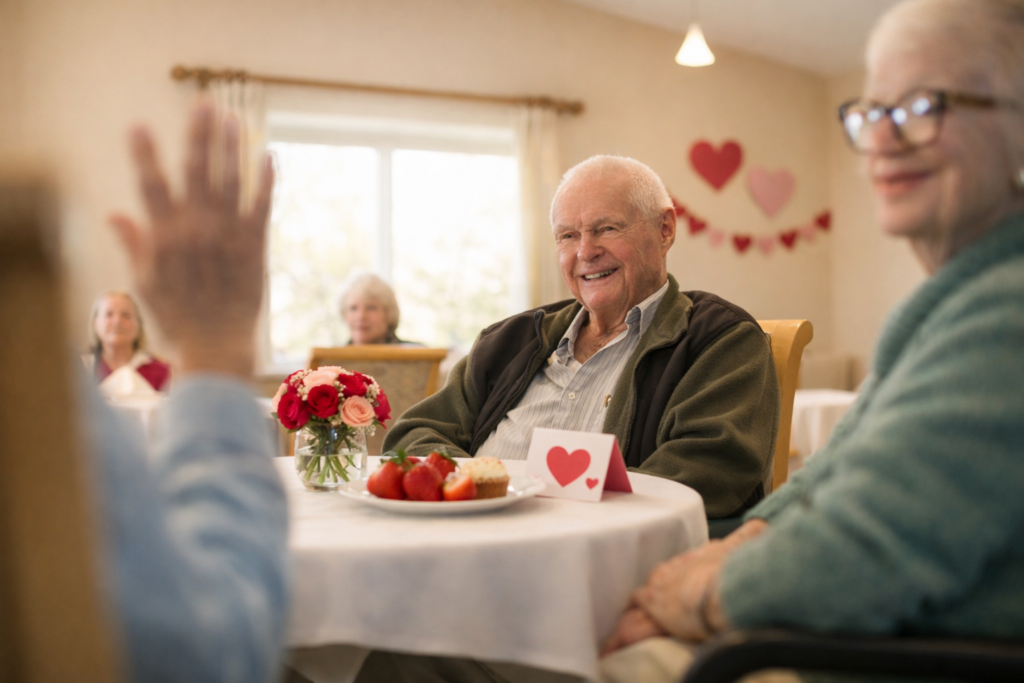
Valentine’s Day is about feeling cherished and connected. If your loved one is a resident of memory care in San Diego, CA, the key is to adjust expectations and alter some traditions while keeping the heart of the holiday intact. Focus on creating moments of warmth, rather than checking off traditional holiday activities.
Creating meaningful Valentine’s connections with loved ones in memory care requires adapting your approach while honoring the enduring power of love beyond cognitive limitations.
Your loved one feels emotions just as deeply now, even when expressing them becomes harder. That’s why changing your approach matters more than skipping celebrations entirely. The LOVE steps give you real ways to create special Valentine’s Day moments that focus on connection.
Listen And Learn: What Does Your Loved One In Memory Care Respond To?
Your heart knows the person your loved one has always been. That same person lives within them now, even as memory changes shape their daily experience. The key to meaningful connection lies not in what they’ve forgotten, but in the emotions that remain vibrant and real. Most residents with dementia continue to feel deeply and express those feelings throughout their journey.
Your loved one’s emotional responses might look different now. One moment, they seem perfectly content, and the next, they could be overwhelmed by something that wouldn’t have bothered them before. Watch their face. Notice their posture. Listen to the tone behind their words, even when the words themselves don’t quite fit together. People with dementia continue to reliably express emotion through these channels long after other abilities change (Lee et al., 2013).
Recognizing their love language in memory care
Even as memory shifts, the ways people prefer to give and receive love remain remarkably consistent. These love languages become even more important when words grow complicated. Each resident has emotional channels that still make them feel genuinely loved:
- Physical Touch: Hand-holding, gentle hugs, stroking their hair softly
- Quality Moments: Your full attention and presence (when memory lives moment to moment, each moment matters more)
- Gifts: Simple, meaningful tokens that say “I thought of you.”
- Words of Affirmation: Kind words, genuine compliments, gentle encouragement
- Acts of Kindness: Small gestures that honor their self-esteem and make them feel valued
Organize Sensory-Friendly Life Enrichment
Sensory experiences open doors to connection when words feel distant. Valentine’s Day offers a perfect chance to create meaningful moments that speak to the heart through touch, sound, sight, smell and taste.
Sensory Valentine’s checklist
- Visual elements: Choose bright red and pink decorations that catch the eye easily. Skip busy patterns that might feel confusing.
- Tactile experiences: Collect items with different textures—soft fabric hearts, smooth paper, gentle materials that invite touch without feeling overwhelming.
- Familiar scents: Bring aromatherapy with rose or vanilla scents or fragrant flowers that can uplift mood, promote positive feelings and stimulate the brain.
- Calming sounds: Put together a playlist of beloved love songs from their younger years. Music stays in memory longer because it is stored in a different part of the brain.
- Sweet tastes: Plan simple treats that honor Valentine’s traditions without being too rich or hard to enjoy.
Visit With Intention And Care
Keep things simple and pressure-free. Rather than elaborate Valentine’s celebrations, focus on quiet togetherness. A brief 30-45 minute visit filled with quality interaction often means more than a lengthy, overwhelming one.
Memory care visiting tips for families
These approaches help create positive interactions when visiting someone with dementia on Valentine’s Day or any special occasion:
- Remove distractions: Turn off the TV, put down your phone and be fully present in the moment. Your undivided attention is one of the most meaningful gifts you can offer.
- Limit group size: Large gatherings can overwhelm someone with dementia. Keep visitor numbers to 3-5 people at most and consider arranging visits on different days if you have a large family.
- Live in their reality: Rather than constantly correcting or reorienting your loved one, step into their world. This approach shows respect and reduces anxiety, particularly important on emotionally charged holidays.
- Bring calm programs: Consider bringing a simple Valentine’s card to read aloud together. Even if they cannot grasp the full meaning, the act of sharing and communicating your love can lift spirits.

Express Love In New Ways
The bonds you’ve built over the years don’t disappear with memory loss – they simply ask you to speak love’s language in fresh ways.
How can I communicate love without words?
Love finds countless ways to express itself when traditional conversation becomes challenging. Watch for what brings peace to their face or relaxation to their shoulders:
- Silent presence: Sitting together in comfortable quiet often says more than a room full of conversation ever could.
- Facial expressions: Your genuine smile becomes a beacon of warmth when words feel too heavy or confusing.
- Familiar routines: The simple rhythm of brushing their hair or sharing afternoon tea shows love.
- Music connection: Those favorite melodies from decades past can unlock emotions and memories, as music has been shown to be an effective tool in connecting people living with dementia with care partners.
Bringing It All Together
Memory care journeys change how we show love, but they never weaken its strength or meaning. This Valentine’s guide has shown how connection goes beyond memory challenges and remains possible at every point along the way.
The dementia path shows how strong love really is. When you listen carefully, plan meaningful life-enriching programs, visit thoughtfully and express love in creative ways, Valentine’s Day becomes less about difficulty and more about real connection.
Perfect celebrations matter less than genuine moments together. Your willingness to meet your loved one in their world, speak through ways they understand and show love as they can receive it.
Call Wesley Palms at (858) 274-4110 to schedule a tour and see how this environment might support your bonds with your loved one.
FAQs
Q1. How can I celebrate Valentine’s Day with a loved one who has dementia?
Keep it simple and comforting. Look through old photos, listen to favorite love songs or share a gentle hand massage. The goal is connection, not a big celebration.
Q2. How do I show love when words are hard for someone with dementia?
Love can be felt without words. A warm smile, holding hands, sticking to familiar routines or playing meaningful music can say everything that needs to be said.
Q3. What are some dementia-friendly Valentine’s Day life enrichment programs?
Choose calm, sensory-friendly programs. Making simple cards, singing familiar songs or enjoying a special treat together works well. Follow their pace and keep things relaxed.
Read Our Front Porch Blogs
Front Porch Podcast – Episode 8: Belonging: The Heart of Community—with Arthur Liggins & Candace Young-Schult
Front Porch Podcast – Episode 7: Commander Beth Coye: A Warrior for Equality
