September 8, 2026
Episode 13: Embracing Change with P.L.U.C.K
Listen On


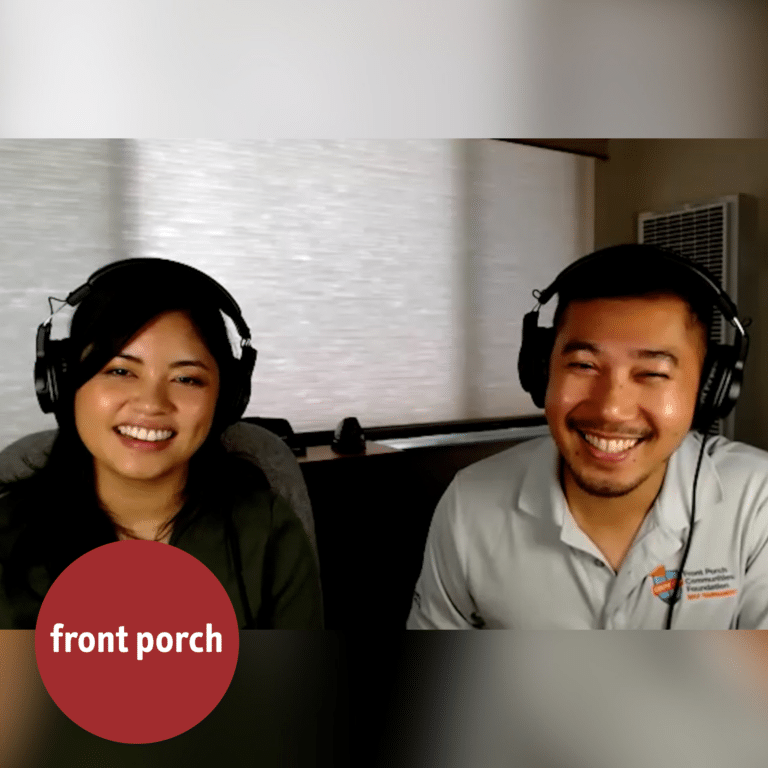
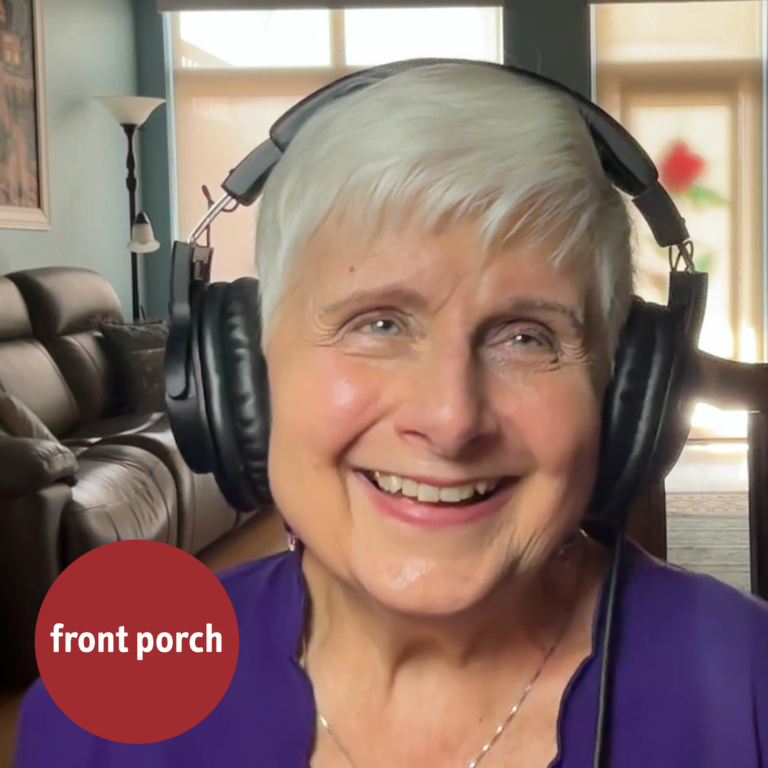
Embracing change is difficult for most of us, no matter our age. But the transition from living on our own to living in a senior community comes with its own unique challenges. Enter Joe Danks, professor emeritus of psycholinguistics and resident president of Casa De Mañana. Joe, together with his wife Carol and their son, developed the P.L.U.C.K. method to help residents and team members at Casa de Mañana understand, adapt to and embrace life’s inevitable transitions. Join host Anna Hall for a fascinating conversation with Joe on why change is so hard, how different personality types respond to change and how we can learn to adapt to, and even embrace change, at every stage of life.
Chapters
- 00:39 – Why Change Is So Hard: Host Anna Hall introduces a conversation about change, exploring why we sometimes resist it, sometimes embrace it, and how learning to navigate change can help us build stronger communities and live with purpose.
- 01:54 – Meet Joe Danks: Anna introduces Joe Danks, a professor emeritus of psychology and longtime educator who, after moving to Casa de Mañana with his wife, Carol, became deeply involved in building a stronger and more resilient community.
- 02:27 – What Is P.L.U.C.K.?: Joe explains the philosophy behind P.L.U.C.K.—patience, learning, understanding, compassion and kindness—and how these qualities can help us navigate our relationships with others and embrace change.
- 03:38 – Making a House a Home: Moving into a senior living community can mean leaving behind a home and routines that have been familiar for decades. Joe shares his own experience of adjusting to life at Casa de Mañana and why creating a sense of home requires connection with others.
- 04:42 – Navigating Change in Community: Joe uses changes at Casa de Mañana—including a kitchen renovation and new dining menus—to illustrate how even everyday changes can be difficult. Listening, learning and working together can make those transitions easier.
- 07:11 – Why Change Gets Harder With Age: Joe explains why change can be particularly challenging for older adults who have spent decades developing routines and ways of doing things. At the same time, he points to residents who continue to seek adventure, travel and have new experiences.
- 09:00 – It’s Never Too Late for Adventure: Joe shares how he and his wife began scuba diving at age 60 and developed a passion for polar expeditions, demonstrating that new experiences and adventures can begin at any stage of life.
- 11:39 – Bringing P.L.U.C.K. to Casa de Mañana: Joe discusses how the P.L.U.C.K. philosophy is taking root in his community, with residents beginning to recognize the importance of kindness, learning about one another and understanding different perspectives.
- 12:17 – From Fireside Chat to Community Leadership: Joe recounts how sharing stories from his career—including his experiences teaching in Poland—led residents to encourage him to take on a leadership role as president of the Casa Club.
- 14:00 – Lessons from a Life of Change: Joe reflects on witnessing profound social and political change during his years teaching and conducting research in Poland, including the fall of communism. His experiences have given him a unique perspective on how people respond to major transitions.
- 15:10 – What History Teaches Us About Change: Joe shares his firsthand experience witnessing the Kent State shootings in 1970 and reflects on how that event and other life experiences shaped his understanding of change, uncertainty and resilience.
- 18:44 – The Power of Community During Change: Joe explains how community provides social support when we’re facing uncertainty. Having people to talk with, share concerns with and work alongside can make difficult transitions easier to navigate.
- 19:55 – Leaving Things Better Than You Found Them: As president of the Casa Club, Joe has a simple goal: to make Casa de Mañana a better place to live and help people enjoy their lives more.
- 21:14 – What Living in Community Teaches Us: Joe describes how living in community has deepened his appreciation for the different perspectives, goals, fears and experiences people bring with them—and how being surrounded by those differences can expand our understanding of others.
- 22:18 – Small Acts of Kindness Make a Difference: The conversation turns to the everyday interactions that build connection: listening, showing curiosity, checking in on a neighbor and simply asking how someone is doing.
- 23:00 – Can We Change Who We Are?: Joe and Anna explore personality, experience and the possibility of change. They discuss how our circumstances influence behavior and how neuroplasticity gives us the capacity to adapt and grow.
- 26:01 – Learning to Adapt: Joe emphasizes that we can’t always control the circumstances we’re given, but we can learn to respond and adapt to them rather than becoming stuck in what we think “should” happen.
- 27:15 – The Meaning of Being a Community Builder: Joe reflects on the personal satisfaction he gets from helping make life better for others and returns to the idea of “pluckishness” as a combination of patience, learning, understanding, compassion and kindness.
Key Takeaways
- Change is inevitable, but how we respond to it can shape our experience of life.
- Moving into a senior living community can be a significant transition, requiring time, flexibility and a willingness to build new relationships.
- P.L.U.C.K.—patience, learning, understanding, compassion and kindness—offers a simple framework for embracing change and strengthening relationships.
- Community provides important social support during periods of uncertainty and transition.
- It’s never too late to try something new, whether that’s scuba diving, traveling, learning or taking on a new leadership role.
- People have different relationships with change: some crave novelty and adventure while others find comfort in routine.
- We may not be able to control our circumstances, but we can learn to adapt and respond to them.
- Small, everyday interactions—listening, checking in, showing curiosity and practicing kindness—can have a meaningful impact on community.
- Living alongside people with different experiences and perspectives can broaden our understanding of others.
- A meaningful life includes opportunities to contribute, grow and make the places we live better for those around us.
Guest Bio
Joe Danks is a professor emeritus in psychology and dean emeritus of Arts and Sciences at Kent State University. He is also a professor emeritus of research at the University of Maryland. After moving to Casa de Mañana, both Joe and his wife Carol have remained committed to building stronger, more resilient communities. They enjoy being grandparents to their three granddaughters, scuba diving and adventure travel around the world.
Host Bio
Anna Hall is a purpose-driven leader with over 25 years in senior living, spanning employee engagement, life enrichment, training and innovation in age-tech and program design. A certified life coach and dynamic speaker, she helps people connect with meaning and motivation at every stage of life. She is the creator of The Purpose Equation®, an evidence-informed framework that empowers individuals to define and activate their unique purpose to enhance wellbeing, engagement and collaboration. As Chief Culture & Community Officer at Front Porch Communities & Services, Anna leads initiatives that foster belonging, creativity and human thriving—building communities where everyone feels valued and inspired to make a difference.
Resources Mentioned
- P.L.U.C.K. — Joe Danks’ framework for navigating change and relationships through patience, learning, understanding, compassion and kindness.
- Casa de Mañana — The Front Porch community where Joe and his wife, Carol, live and where he serves as president of the Casa Club.
- Front Porch Communities and Services
If this conversation resonated with you, share it with a friend, subscribe and leave a review to help others discover the show.
Listen On
Disclaimer
The views and opinions expressed on this podcast are those of the speakers and do not necessarily reflect the views or positions of any entities they represent. This podcast is for informational purposes only and should not be considered, legal, health, tax, or professional advice. Always consult a licensed professional for specific advice related to your situation.
Anna Hall: We’re taught from a young age to value independence. But what if our true strength is our ability to connect with others? Through conversations with the fascinating folk who live and work at Front Porch Communities and Services, we explore how community shapes us, how we can learn from people in every stage of life, and how each of us makes an impact in our own communities and beyond. Welcome to The Front Porch Podcast. I’m your host, Anna Hall.
Today we’re going to talk about change with Joe. And I can’t wait for you to hear about the adventures in life, both his chosen adventures, moments he had in life that maybe he didn’t choose to have, and how he learned from them, and how he is helping other people through community to navigate change and embrace change.
In today’s episode, we’ll talk about what does that look like to embrace change. And sometimes we don’t embrace it. Sometimes we deny it, sometimes we resist it, sometimes we invite it, sometimes we anticipate it. But regardless of how we think about change, it is going to happen. And people who are equipped with the ability to navigate through changes to leave behind something that serves us and have the trust and the hope and the belief that something new could serve us as well or better. That is really the key to building successful community, to having meaningful relationships, to living with purpose, and to making the best out of this very complicated life that we’re all trying to figure out one day at a time.
Joe Danks is a professor emeritus in psychology and dean emeritus of arts and sciences at Kent State University. He’s also a professor emeritus of research at the University of Maryland. After moving to Casa de Mañana, both Joe and his wife Carol have remained committed to building stronger, more resilient communities. They enjoy being grandparents to their three granddaughters, scuba diving and adventure travel around the world.
Joe. Welcome to The Front Porch Podcast.
Joe Danks: Hi Anna.
Anna Hall: Thank you so much for being here. So I’d like to dive right in with a word you use that I haven’t heard before. It’s called P.L.U.C.K.
Joe Danks: Yes.
Anna Hall: Could you explain that, please?
Joe Danks: The original word was P.U.C.K. and it stands for more patience, understanding, compassion and kindness. That if we have those characteristics then we get along much better in our interactions with each other.
I was starting to write a piece about that, and we decided that P.U.C.K. was a little bit too close to some other English words.
Anna Hall: I understand.
Joe Danks: And so our son who happened to be, at that time lived nearby. We were talking about this as a family, and he came up with adding “learning” that we need to learn about other people’s perspectives in order to have understanding and so on. And so it became P.L.U.C.K. But that is the origin of it in terms of representing several characteristics that residents and staff need to have to deal more effectively and compassionately with each other in our daily interactions.
Anna Hall: It does. It does. So what is going on where people are having challenges navigating change? ‘Cause I think that’s a human part of the human condition is how do we navigate change?
Joe Danks: Many residents have moved from a relatively large house, a single family dwelling that they have lived in for many years. And my wife and I have talked about this, that for except for the 20 years when we were raising our two sons for well, well over 50 years, we had dinner together almost every evening, just the two of us.
Suddenly when we moved here to Casa de Mañana we felt like we were going back to college for the first time. We’re in a dining room meeting with lots of people. We have to identify our friend groups. When we move into Casa de Mañana we’re not just moving into a hotel and renting a room. Rather we are moving into a home, which is our residence. We have to make this house into a home when we move here. And so this is what led to, in part, the P.L.U.C.K. notion in terms of dealing with other people. At Casa de Mañana right now, we had two difficult transitions last fall. Our 100 year old kitchen has been ripped out and is being reconstructed to have a new kitchen. But at the same time that that went on, there was a major change in the menus. This was a major shock to residents at Casa de Mañana because their favorite items on the on the previous menu were no longer there. We’re now into the third six week cycle of menus and our dining committee has worked very hard with residents to collect back comments and to see what kinds of things work.
And we have a wonderful new chef, Chef Jen, that has been she’s been here two months, and she’s been remarkable at putting together things that the residents really like.
Anna Hall: And so you think that learning and compassion can help people adjust to change more easily?
Joe Danks: I think so, yes. People don’t really have a good idea as to what kinds of pressures the cooks and servers are under when they’re getting food on the table to us. And there are some things that that if we knew how things worked and we’ve made some changes along those lines, it can work much better, but it is part of the learning and understanding and working together on it. People who have lived on their own, have developed an understanding as to what food things they really enjoy and they really like. But now when you’re trying satisfy over 200 people, which is our resident population here…
Anna Hall: That’s 200 taste buds, right?
Joe Danks: Yeah, exactly. And 200 different experiences as to what food they like.
Anna Hall: What is that partnership look like among residents and team members and the kitchen team to get to a place where people are more satisfied?
Joe Danks: I think it’s working. It’s changed. When I look at what it is now, as we’re approaching nine months into this, into this process, things are doing much better in terms of residents being able to communicate their preferences. What dishes are really good, and which ones…nah, don’t have that again.
Anna Hall: Yes.
Joe Danks: And having specific comments. The comment card, which we just recently learned is used now throughout Front Porch.
Anna Hall: It is because resident feedback is so important. We need it in real time. Why is change so hard?
Joe Danks: Change is hard, particularly, I will say, for older people, because we’ve been doing things our way for 60, 70, 80, 90 years, and we’re kind of set in our ways.
Anna Hall: You’ve also experienced a lot of changes, right?
Joe Danks: That’s right, and we’re tired of it.
Anna Hall: Ahhh!
Joe Danks: There’s some people here who invite change and adventure. I mean, we still have people here who skydive. We have people here who surf who go on extensive safaris, who go to the geographic North Pole, who go to Antarctica, who scuba dive. Finally, they have the free time and resources to undertake some of these, these adventures that they couldn’t do earlier in their life because of family, career, money, etc. But there are other people who we are concerned about because here we are able to get meals to go. We’re concerned about people who do that all the time, who don’t want to interact with the residents, who don’t want to, who don’t go on field trips to the San Diego Safari Park or the San Diego Symphony and so on, that they really just stay in their room all the time. One of the one of the things that I’ve been trying to do as president is to increase the amount of interaction in planning and organizing with the management staff, taking information from the residents as to what things would work, and prefer due to make this more of a of a home rather than a house.
Anna Hall: Beautiful. So some of this is people’s personality. I think. Some people tend to be more open to experiences. some people crave change. Some people crave routine and familiarity. I believe that you’re one of those people you mentioned ‘cause you scuba dive.
Joe Danks: Yes, we, my wife and I, did extensive scuba diving. But here’s the thing that is relevant to that: my wife and I did our first scuba dive when we were 60.
Anna Hall: Incredible. What sparked that?
Joe Danks: Well, scuba diving is expensive. And we had two sons, which we got through university. They got married and had their first homes and started having kids. And so then we had the the time and resources to start scuba diving ourselves at 60.
Anna Hall: How deep have you gone?
Joe Danks: Well, I’m not supposed to have gone this deep, but I’ve gone to 145 feet.
Anna Hall: Wow!
Joe Danks: But typically the best scuba diving where we are, where we have scuba dived, is really 60 to 80 feet.
Anna Hall: Oh, you went a lot further than typical.
Joe Danks: Yeah, that was an unusual thing at the Blue Hole in Belize. It was an unusual circumstance.
Anna Hall: You’re very brave man. Your wife Carol went that deep with you?
Joe Danks: Yeah.
Anna Hall: What was it like?
Joe Danks: It was very eerie. There aren’t many fish down there. It’s darker and it’s in a hole with a lot of coral around. Although the coral tends to disappear the deeper you go. We’ve gotten very much involved in very interested in polar expeditions. We have been to the geographic North Pole, and I have done a polar plunge at the geographic North Pole.
Anna Hall:
Not many people can say that.
Joe Danks: That’s true. We just love those polar experiences.
Anna Hall: What do you love about them?
Joe Danks: It’s a world that’s totally different from what we see in our everyday lives, particularly in semi-tropical areas like San Diego. I always thought ice would be totally boring. It’s not. As a matter of fact, we’re going later this year up to Svalbard, which is inside the Arctic Circle north of Norway. And then two weeks after that, we’re going to South Georgia, which is down close to Antarctica.
Anna Hall: Incredible. So you’re a person who enjoys adventure. And it sounds like change isn’t something that holds you back from trying things. The fear of it.
Joe Danks: No. That’s exactly right. And luckily, both my wife and I feel the same way. What I’ve told her in terms of our travel, there will come a time when physically and mentally, I’ll just want to go to Paris and sit in a cafe.
Anna Hall: And eat croissants on a cobblestone street.
Joe Danks: That’s right. Instead of going to the Poles.
Anna Hall: But you’re still talking about going to Paris.
Joe Danks: Oh, yeah.
Anna Hall: So change is something that you have figured out how to manage. And now you’re bringing this this philosophy around change, P.L.U.C.K., to Casa. What impact have you seen?
Joe Danks: I hear various people talking about P.L.U.C.K. or they’ll talk about one of the characteristics, “Well, we just need more kindness around here,” or “I need to learn about what their issues and problems are.” I hear some of that coming around. It’s a slow process. It doesn’t happen overnight. I’m seeing some change in people. Not everyone, not every circumstance. But there’s a lot of change going on that I think is important. And I’m hoping I’m making a small amount of difference in my two years as president here.
Anna Hall: It sounds like you are. You’ve been president for two years. So how did that happen?
Joe Danks: Casa has something called fireside chats. And one of those fireside chats we had lived in, I had taught at the University of Warsaw in 1978 when it was deepest, darkest Communism. And we went there with our two sons that were age 3 and 6. So I gave a talk on what it was like living in communist Poland at that era, and we actually saw much of the change. I had a research program with colleagues there that lasted for about 15 years. And so every other year I was going back and at the end state, I saw martial law, I saw Solidarnosc, I saw it become a capitalist society with the fall of the wall and everything else.
And my wife developed, as a result of that trip, an intense interest in Holocaust education. She’s a English and journalism teacher. She talked about Holocaust education in a different fireside chat. And I think people identified that, oh, these people know how to put two words together. That and the fact that I was chair of the department and a dean and I presumably had some organizational administrative skills.
Anna Hall: Presumably.
Joe Danks: Yeah, and that would be useful to a president and I think that’s what some of the thinking was.
Anna Hall: And you bring such a perspective. I mean, you saw a new democracy emerge in Poland. You were also at Kent State in the 70s. Could you tell us about that experience?
Joe Danks: That was in the Vietnam War. Nixon had just invaded Cambodia. And, you know, everybody was upset.
Anna Hall: Yes.
Joe Danks: There were protests around the state of Ohio and around the country. Many campuses were involved with that. But Kent State was not, is not, was not a radical campus. It was primarily in-state students, many from northeast Ohio, around Cleveland. They were often first generation college students.
The weekend before the Saturday and Sunday, the students and National Guard were talking to each other. They were putting flowers in the rifle and, you know, this sort of stuff. But then on the Monday, where the protest was, which had been announced that it was an illegal protest, the guardsmen were there and they pushed the students back.
And then there apparently was a command. This was a some somewhat of a dispute with the guardsmen knelt and turned and shot. The nearest student was something like 60 to 100 yards away. They were not being threatened by the students in any means. They were a long way away. One student just happened to be walking through a parking lot on her way to class. As a matter of fact, that student I had in a class, it was a larger class, so I didn’t know her personally. I won’t claim that, but I had her in class that semester she was one of the four students killed.
Anna Hall: Did you did you actually witness the protest…
Joe Danks: Oh yeah.
Anna Hall: and the shooting?
Joe Danks: The shooting was on the other side of a hill from where the protest started, and I could see where the protest started and was watching it there.
Anna Hall: It sounds eerily familiar to what happened in Minnesota recently.
Joe Danks: I don’t disagree. I’m not… I don’t know the details. I only know what I read in the paper.
Anna Hall: Did it bring back some strong emotions for you, though.
Joe Danks: Oh definitely. Yeah.
Anna Hall: It must have.
Joe Danks: Very strong emotions.
And I will say that my wife is a student 30 years. She’s published books and articles and so on. Even as a high school teacher on the Holocaust and the education about the Holocaust. What’s happening nationally now is eerily similar in terms of the control of the press, in terms of the control of people. The government is taking action to people based on their personal characteristics in terms of their race, their gender, their ethnicity, their political beliefs, economic status, it’s the an authoritarian approach that is ignoring the courts and being heavily executive and administratively driven. I mean, that’s exactly what happened to Germany in the in the 30s.
Anna Hall: What is it like to experience this again decades later? Did you ever think back then: We made it. We got through it. We’re moving forward. This isn’t going to happen again.
Joe Danks: Yes. It’s amazing. My wife and I talk about this all the time because of our experiences and where we’ve lived and her, her work. But it’s also the case that we were college students during the 60s, when there were the civil rights riots around. Johnson was able to pass the Civil Rights bill. We were around… we were in Ohio for when the Chicago Convention riots were happening about as a result of the Vietnam War protest. We were there with Nixon and Watergate.
Anna Hall: Incredible.
Joe Danks: And people thought the country was falling apart during the 60s. So I have hope that a decade from now, we will look back on another decade and say we survived it. We as a country survived it. But I hope I’m around to read the history of this period written at that time.
Anna Hall: Thank you for the hope. I think that will help a lot of people who feel a little bit hopeless sometimes right now with what’s happening.
Joe Danks: Right.
Anna Hall: Thank you. So you’re a professor of psycholinguistics. Could you tell us what that means?
Joe Danks: Basically, it’s a psychologist. I’m an experimental psychologist, not a clinical psychologist.
Anna Hall: And what does that mean? What’s the difference between experimental and clinical?
Joe Danks: I do research in labs trying to find out about the human mind.
Anna Hall: Fascinating.
Joe Danks: I have done other work on problem solving, on thinking, on memory, and I even have gotten into ultimately some social psychology and either some anthropology stuff later in my career. But basically it started out trying to figure out how the mind works with a focus on language.
Anna Hall: Words and how we think and how we learn and compassion and how how that mindset and those practices help us embrace change and try new things seems to be quite a central theme in your life. What is the impact of community on human ability to embrace change? Does it help? Does it hurt? What? What does that intersection look like?
Joe Danks: When there’s change, if you have a community, you can talk about it. And talk about the positives and negatives, the anxieties, the pressures, etc.. You begin to have that kind of social support. I’m not in this alone. There are other people that are experiencing this, and we can work together to get through it or to make improvements or to make changes and, and going forward.
Anna Hall: But it can be difficult to navigate because we hold on to the current state because there is something about it that serves us. And it is it is understanding that going to the new state, how will that new state serve us? And it’s a little bit of a step into the unknown. And you have to understand why. Why am I leaving something that serves me to move on to something new? And that’s really hard sometimes.
Joe Danks: Um huh. Yep.
Anna Hall: What is your goal in being the president of the Casa Club?
Joe Danks: I mean, as a single goal is that that Casa will be a better place to live when I’ve ended my term than when I started. That people will be happier here. They will enjoy their lives more. It’ll be a better place to live. But that’s pretty vague. I don’t have any, any data or any exact criterion as to how you measure that, but that’s sort of the general goal.
And I do believe that approaching that goal or trying to strive for that, it’s done with lots of small little things. Not everybody likes particular kind of music so how do we deal with the entertainment that we have coming into Casa. And so… but it’s going to be a lot of little things that go on. And I’m sure this is true at most of the of the communities. But I meet along with my two vice presidents for an hour every week with the executive director. We’re trying to solve problems. Sort of one little problem at a time. And then one or both of us go off and try to implement those things to make things a little bit better here at Casa de Mañana.
Anna Hall: What have you learned from living at Casa?
Joe Danks: I’m not sure I learned it, except it became more real to me about how different people are in terms of their perspectives, in terms of their goals, in terms of how they live their lives. Prior to that, while I was very involved in the University and my wife in, in high school education, where we interacted with lots of people all the time, but we always came home and we pulled out of that environment. Here at Casa we’re in this environment 24/7.
Anna Hall: Yes.
Joe Danks: And so we really experience the diversity of individuals, their strengths, their weakness, their goals, their objectives, their fears, their uncertainties. But if you’re going to try to make a better community, you have to understand that diversity and take it account so that all people, all those diverse perspectives can be represented in the community.
Anna Hall: And you do that through listening and compassion, curiosity, meeting people where they are.
Joe Danks: Right. Kindness, talking not necessarily about anything dramatic or important. But just seeing someone in the hallway and “how are you doing today? I heard you… haven’t seen you in the dining room Hope nothing’s wrong with you. Hope everything’s going great” or, you know, whatever. And they’ll say, oh, I was off visiting my kid for three days. And so… okay. But those sorts of interactions can make a difference.
Anna Hall: They do. And you know we’ve been talking a lot about personalities and how different people are, both their experiences, their genetics, how we’re built. Let’s go back to you said some of the residents don’t come to the dining room often. They prefer to get takeout and stay in their room. And at Front Porch we’re very interested in understanding what is the difference between maybe being more introverted and very much enjoying your own company, having your own things to do that you’re very happy and satisfied with, versus being lonely and then being isolated.
Joe Danks: Those are two different things between my wife and me she’s very much the extrovert. She’s the social director of the family, and I have historically been much more of an introvert.
Anna Hall: Here you are on a podcast, president of the Casa Club, but you’re an introvert.
Joe Danks: Yeah, that’s right.
Anna Hall: How is that?
Joe Danks: I’ve changed over the years. When I think about being a high school student, I was very much an introvert. You know, I had a close, close group of friends and that was it. But over the years, I… she’s dragged me out of my, my shell. And we, we do lots of things together. So people change depending on circumstances and the environment and so on. And it’s one of the interesting things. You’re familiar with the Myers-Briggs, I’m sure.
Anna Hall: Very. It’s a way of understanding people’s personalities, introversion, extroversion. Yes.
Joe Danks: I have taken that at least three times. Once when I was just a faculty member, once when I was chair of a department of 30 faculty, and once when I was dean, over 500 faculty. My personality on the Myers-Briggs changed as a function of the environment. I mean, it tends to be oriented towards your work group. And I’m sure you know what that means.
Anna Hall: Yeah. Well, I like Myers-Briggs. I like Big Five even better ‘cause it’s more of the basis for it. But some of the traits that tend to be stable across a lifetime are openness to experience.
Joe Danks: Right.
Anna Hall: Right? Conscientiousness tends to like organization and planning, and that tends to increase over time. And then neuroticism is what they called it. Or emotional stability tends to increase over time with age. And then agreeableness I think is pretty stable.
Joe Danks: Right.
Anna Hall: But introversion and extroversion you can grow and change, like you said depending on the circumstances.
Joe Danks: I’m not a big fan given my background, professional background, I’m not a big fan of personality theories, particularly grand personality theories. I believe more that our actions are situationally determined and rather than driven by our personalities. But certainly the personality, those enduring psychological traits do play a role in how we behave at any given time.
Anna Hall: Certainly. So other people can’t change us. Other people can’t make us change. But we can change. And that’s where neuroplasticity comes into mind. Right? And circumstances that can help us adapt. And I think that adapting is really the key to a successful life.
Joe Danks: I agree with you 100% that circumstances…
Anna Hall: Tell me more. Tell me more since you agree.
Joe Danks: No, but since circumstances are changing, you have to be able to adapt or respond appropriately to the situation. I mean, you can’t control the situation typically.
Anna Hall: No.
Joe Danks: And so you have to adapt to the situation. You have to respond to the situation that you’re presented with, not what you wish it would be.
Anna Hall: Or what you think it should be. The good old “should” word, right?
Joe Danks: Yeah, I was gonna say, I don’t like “should.”
Anna Hall: No. Me neither. Not at all. As soon as I hear someone say “should” I say what did you just say? Because “should” means it doesn’t actually exist. It’s a construct in your mind that you wish were true.
Joe Danks: I even go farther than that. I say. “And which theological argument are you looking at for that moral principle of should?”
Anna Hall: Very well said. Very well said. Well, you are a community builder, Joe.
Joe Danks: Well thank you.
Anna Hall: What does this do for you to know that you’re playing this role in community?
Joe Danks: I am, in part, very selfish about it. If the community’s improved my life is better. On the other hand, I do have a, I think, a strong sense of altruism, and so that I want to build better lives for other people. I certainly get a great deal of pleasure out of seeing people whose lives seem to be better, in part because of the things we’re trying to do here in terms of building community.
Anna Hall: And helping people learn to mitigate change, navigate change, adjust to change, adapt to change, whatever that might look like.
Joe Danks: I also like the psychological characteristic of pluckishness.
Anna Hall: I love it. Could you tell us one more time what does it mean?
Joe Danks: It means patience, learning, understanding, compassion and kindness.
Anna Hall: Thank you so much for bringing that that philosophy to Casa de Mañana and to Front Porch. It’s been an absolute pleasure talking with you. Thank you so much for this conversation.
Joe Danks: It’s been great talking with you. I’ve really enjoyed our conversation.
Anna Hall: You’ve been listening to The Front Porch podcast. I’m your host, Anna Hall. Our theme music was composed by Geoven Snaer and Dianne Kae Enriquez. Carmen Elena Mitchell is our producer and editor. Our recording engineer is Jeff Gall. Special thanks to Laura Darling, Kate Vermillion and Joanna Aceves for production and marketing support. Casa de Mañana tech support provided by Danyal Zina.
Front Porch is a dynamic nonprofit organization dedicated to empowering individuals to live connected and fulfilled lives through community and innovation. In support of this vision, Front Porch provides high quality, accessible and welcoming human services through senior living communities, affordable housing communities, and other programs and services. Learn more at Front Porch.net.
If you enjoyed today’s conversation, please share it with a friend and help others find us by subscribing and leaving a review. We’ll be back soon with more stories from the fascinating folk who live and work at Front Porch. Until then, stay connected and inspired.