February 10, 2026
Alzheimer’s Care: Tips to Speak Love Without Words
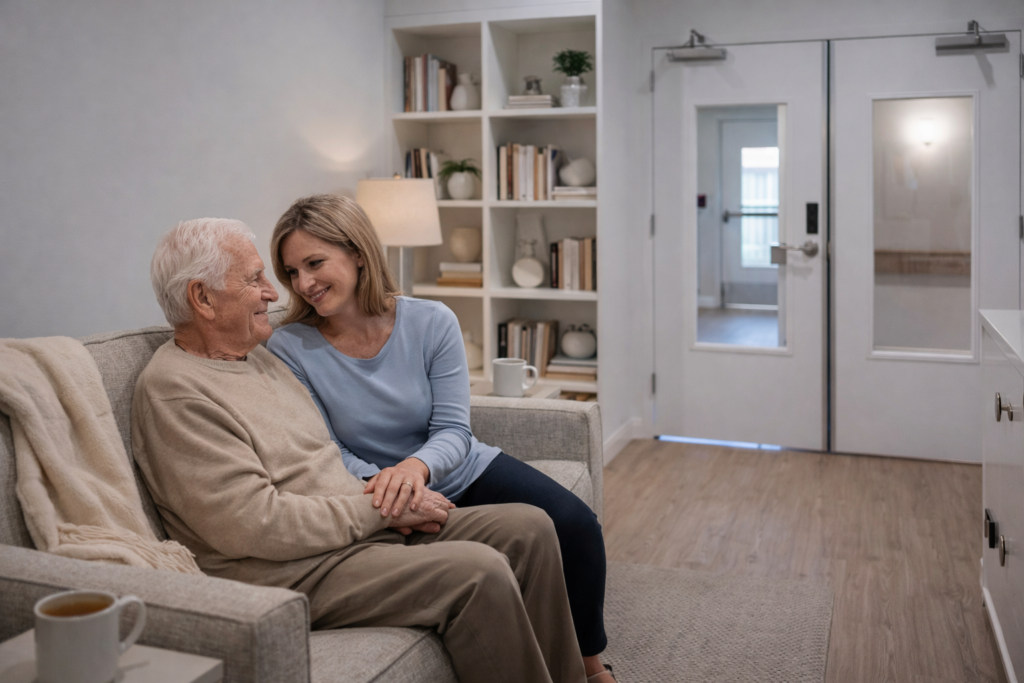
Your love doesn’t disappear when Alzheimer’s changes how you communicate with someone dear to you. Eye contact still says, “I’m here.” A gentle touch on the hand still means “you matter.” Sitting together in quiet moments still creates a connection that goes deeper than any conversation ever could.
When words fade in Alzheimer’s care, love finds new expressions through presence, touch, and shared moments that transcend cognitive decline.
Bridge the silence in Alzheimer’s care in Orange County, CA by mastering non-verbal love languages, from therapeutic touch to the power of eye contact. Learn how to maintain deep emotional connections when words fade. Experience this heart-centered approach at Walnut Village—where compassion speaks louder than words.
Speaking the Heart’s Language When Words Fade in Alzheimer’s Care
Your loved one sits quietly, and you wonder how to bridge the growing silence between you. The good news? Love never loses its voice – it simply learns to speak differently. For families exploring memory care options, discovering these new ways to connect becomes a beautiful part of the journey.
Eyes that say everything
Your gaze carries more power than you might realize. Direct gaze perception actually gets stronger during the early stages of Alzheimer’s, creating a direct path to your loved one’s heart even when words feel tangled (The Alzheimer’s Association, n.d).
When you look into their eyes with gentle attention, you’re telling them something profound: “You matter. You belong. I see you.” This simple act creates an instant bridge between two hearts, no conversation required.
The magic of human touch
Sometimes your hands say what your voice cannot. Just five minutes of hand massage works like medicine (Bender et al., 2022), melting away stress hormones while flooding their system with serotonin – nature’s own comfort drug.
Think of it this way: every gentle squeeze of their hand, every soft pat on the shoulder, every warm hug whispers a message straight to their heart. “You are loved. You are not alone.”
Faces that mirror love back
Here’s something remarkable: residents with Alzheimer’s become especially good at picking up on emotions from those around them. Your facial expressions become their emotional weather forecast.
When you approach with genuine warmth and a peaceful expression, they naturally reflect that same calm energy to you. But the reverse holds too – worry and frustration on your face can create restlessness in theirs.
Your smile becomes a gift that keeps giving. Even when words feel scrambled, your loved one still reads the emotion behind your expressions perfectly. They respond to the feeling you bring into the room, not the sentences you might struggle to form.
Five Ways Love Speaks When Words Won’t Come
Love languages offer a roadmap for families navigating memory care. These five approaches help you stay connected with your loved one, even when conversation becomes difficult.
1. Physical touch: hugs, massage, hand-holding
Your hands become powerful messengers when speech fails. Hand massages relax muscles, lower stress hormones, and boost serotonin—the body’s natural calm-maker.
Simple touches work wonders. Holding hands during a meal, a gentle pat on the shoulder, or a warm hug at bedtime all send the same message: “You matter to me.” This approach costs nothing, requires no special training, and consistently improves quality of life.
2. Quality time: sitting together, shared silence
Forget long visits filled with conversation attempts. Focus instead on “quality moments”—brief periods of your complete attention. Your loved one lives mainly in the present now, making these moments precious.
Sit together on the porch watching birds. Hold hands while the evening news plays. Share comfortable silence over afternoon tea. These simple acts of presence speak volumes. You might combine this with a gentle touch—holding hands while watching their favorite show creates a double dose of connection.
3. Acts of service: grooming, helping with meals
Small acts of help become expressions of love. Brushing their hair, preparing a favorite meal, or helping them get dressed communicates deep care.
Here’s something important: let them help you too, even if they can only fold the same towel repeatedly or push a vacuum over the same spot; their contribution matters. This preserves self-esteem while showing you value their efforts.

4. Gifts: sensory gifts for Alzheimer’s patients
The right gift engages their senses and sparks joy. An iPod loaded with songs from their teenage years often triggers smiles and memories that seemed lost.
Consider gifts that invite exploration: textured blankets, scented lotions, smooth worry stones, or a basket filled with different fabrics to touch. These items reduce anxiety while creating opportunities for gentle interaction.
5. Words of affirmation through tone and expression
Your voice carries more weight than your words now. Speak slowly, warmly, patiently—especially when they ask the same question for the fifth time.
Pair your gentle tone with steady eye contact and relaxed body language. They may not grasp your words, but they’ll absorb your emotional message loud and clear. Compliments still matter, particularly when delivered with genuine warmth.
Finding Hope When Words Fade
This path asks you to learn a new language—one written in patience, presence, and gentle understanding. Some days feel harder than others. Some moments bring unexpected joy. All of them offer opportunities to show love in ways you never knew possible. Love finds its way through every barrier Alzheimer’s creates, proving that connection runs deeper than memory ever could.
The heart remembers love long after the mind forgets words—your consistent presence and gentle touch communicate what matters most, proving that meaningful relationships can thrive even as dementia progresses. Call Walnut Village at (714) 507-7000 and schedule a tour to see these caring approaches in action.
FAQs
Q1. How can I show love to someone with Alzheimer’s without using words?
You don’t need words to express love. Simple things like steady eye contact, a gentle touch, or sitting quietly together can say a lot. Holding hands, smiling, listening to music, or looking through photos together often creates a strong sense of comfort and connection.
Q2. What non-verbal communication works best for someone with dementia?
Non-verbal cues matter a lot. Try staying at eye level, using warm facial expressions, and moving slowly. Gentle gestures, light touch (when welcomed), and standing in front of them can help them feel understood.
Q3. Why is physical touch so important in Alzheimer’s care?
Physical touch can be incredibly calming and reassuring. Something as simple as holding a hand or giving a short hand massage can reduce anxiety and stress for your loved one. Even a few minutes of touch can have a soothing effect that lasts well beyond the moment.
Read Our Front Porch Blogs

Investing in community: the story of David and Jane Kretzmann
Front Porch Podcast – Episode 8: Belonging: The Heart of Community—with Arthur Liggins & Candace Young-Schult