
October 30, 2026
Thrift Shopping and Sustainability as a Creative Practice

Key Takeaways
- Thrift shopping and sustainability become more rewarding when a find is treated as a starting point rather than a finished purchase.
- A chipped bowl, a loose chair or a half-used notebook can all be reimagined with a little time and attention.
- At Friends House in Santa Rosa, independent living leaves room for hands-on projects, from mending to repurposing, alongside resident-led programs and an on-campus thrift shop.
What If the Best Thrift Find Is the One You Have to Fix?
There is a particular pleasure in finding something you were not looking for.
That sense of discovery is part of what makes thrift shopping and sustainability such a natural pairing. Choosing something secondhand can keep a useful object in circulation while making shopping feel less centered on acquiring something new.
For people embracing independent living, that perspective can extend beyond shopping. It is about having the freedom to make choices that reflect personal values, interests and curiosity. At Friends House, independent living offers time to devote to lifelong passions or discover new ones, with room for autonomy and adventure.
The Pleasure of Finding Something Unexpected
Thrift shopping rewards patience. There is no guarantee that the perfect find will appear, which is precisely what makes the experience interesting.
It can also encourage a different relationship with possessions. Rather than asking, “What is new?” the question becomes, “What is useful, beautiful or interesting to me?”
That small shift can make sustainability feel less restrictive. It becomes a creative practice rather than a chore.
How Does Secondhand Shopping Connect With the Spirit of Santa Rosa?
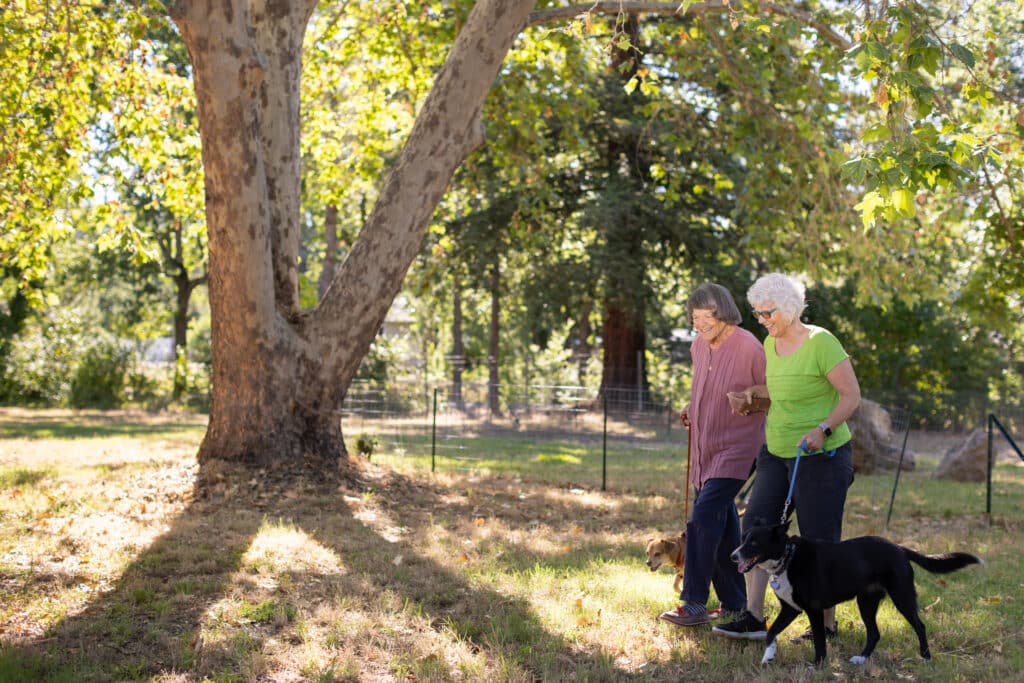
Santa Rosa offers a natural setting for thinking about sustainability as something lived rather than simply discussed. The city sits within Sonoma County’s wine country, where agriculture, gardens and the landscape are woven into everyday life. Friends House reflects that connection through a seven-acre campus with more than 100 fruit trees, personal gardens, a community garden and walking paths.
A Thrift Shop Can Become a Place for Connection
A thrift shop is more than a collection of objects. It can be a place where people browse together, exchange recommendations, talk about what they have found and appreciate the stories that objects seem to carry.
In Santa Rosa, where local life can be closely tied to community, food, gardens and the natural environment, secondhand shopping fits naturally into a broader appreciation for making thoughtful use of what already exists.
Can Sustainable Choices Become Part of Independent Living?
Sustainability is sometimes presented as a long list of things people should stop doing. But there is another way to approach it: as a collection of possibilities.
Buy something secondhand. Grow vegetables. Reuse a container. Repair something instead of replacing it. Share an item with a neighbor. Walk somewhere when practical. Each choice can become a small expression of participation.
At Friends House, this spirit extends beyond Susan’s Table, the community’s thrift shop. Residents can take part in cultural, educational and environmental events or create and curate their own. The community also has resident-run programs, volunteer opportunities and a resident-run bee and butterfly garden.
From Shopping to Stewardship
The most interesting part of thrift shopping and sustainability may not be the purchase itself. It is the mindset behind it.
Secondhand shopping asks us to slow down and consider what already exists. Gardening asks us to pay attention to seasons. Reusing something asks us to imagine a purpose beyond its original one.
These are all forms of stewardship, a value rooted in Friends House’s Quaker heritage, but they can also be forms of creativity.
Friends House offers another example through its solar power initiative. The project began as a resident-led effort and eventually resulted in 362 solar panels across 20 roof faces. The panels are expected to cover 85% of the energy needs of the community’s main building.
What Can We Learn From Buying Less and Choosing Differently?
Perhaps the deeper appeal of thrift shopping is that it changes the pace of consumption.
There is satisfaction in finding something with character. There is satisfaction in knowing that an object has remained useful. And there is satisfaction in discovering that sustainable choices do not have to make life smaller.
They can make it richer.
For someone considering independent living, that idea offers an appealing way to think about the years ahead. A fulfilling life does not have to be measured by how much we acquire or how quickly we move from one thing to the next. It can be shaped by what catches our attention, what we choose to care about and what we share with others.
Making Room for Curiosity
The beauty of thrift shopping and sustainability is that neither requires perfection. Both leave room for curiosity.
You might walk into a thrift shop looking for a lamp and leave with an old cookbook. You might begin gardening for the vegetables and discover that you enjoy the rhythm of tending the soil. You might join a community project because you care about the environment and find yourself learning something completely unexpected.
Discover More at Friends House
Friends House offers an independent living setting where curiosity, connection and personal interests can have room to grow. In Santa Rosa, residents can explore gardens, resident-led programs, environmental initiatives and community spaces while shaping a lifestyle that reflects what matters to them. Learn more about how independent living at Friends House can become part of that ongoing journey.
FAQs
Q1. Is thrift shopping a form of sustainable living?
It can be. Buying secondhand gives existing items another opportunity to be used rather than automatically purchasing something new. The environmental impact varies by product and behavior, but choosing thoughtfully and using items for longer can support more intentional consumption.
Q2. What makes Friends House distinctive for independent living?
Friends House combines independent living with spaces and opportunities for lifelong learning, resident-led programs, gardens, environmental involvement and social connection. Its seven-acre campus also includes Susan’s Table thrift shop, community gardens and walking paths.
Q3. How can sustainability become more enjoyable?
Start with what already interests you. Thrift shopping, gardening, repairing, sharing and participating in local environmental projects can make sustainable choices feel social and creative rather than restrictive.
Read Our Front Porch Blogs

9 Front Porch senior living communities earn national rankings

Purpose, Perspective, and P.L.U.C.K.: How Joe and Carol Danks Turn Philosophy into Local Impact