
June 13, 2026
What Independent Living Is Teaching Us About the Future of Cities
Photography by Tracy + David, www.tracydavid.com
Tracy Boulian and David Ahntholz
For decades, many American cities were designed around cars, separation, and a version of convenience measured in parking spaces. The result was a landscape that made driving easier while making everything else, walking, connecting, participating in neighborhood life, quietly harder.
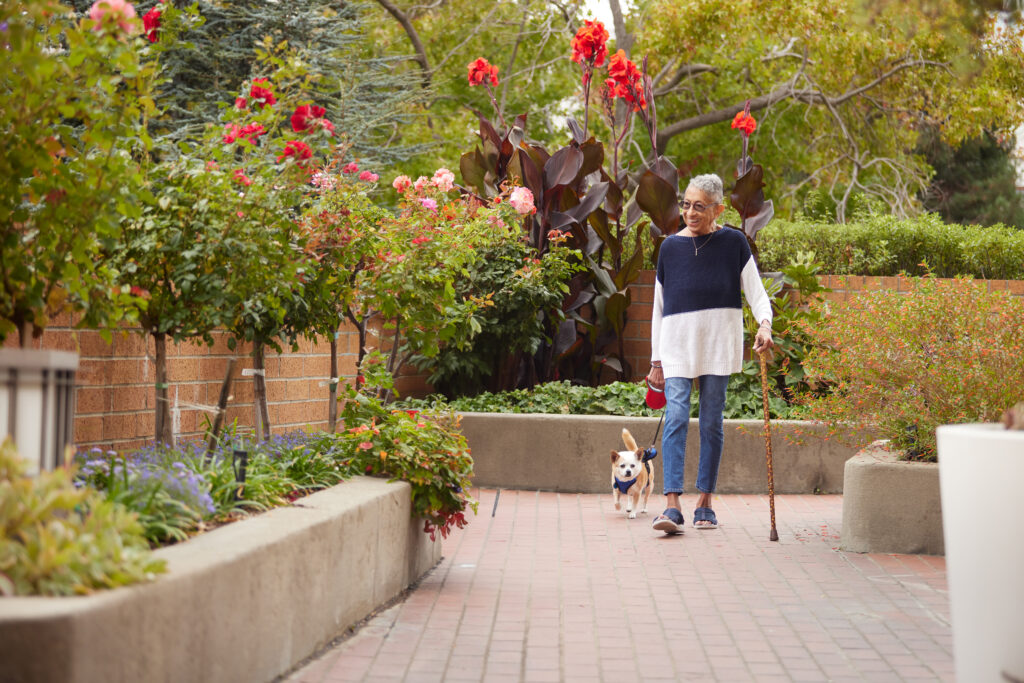
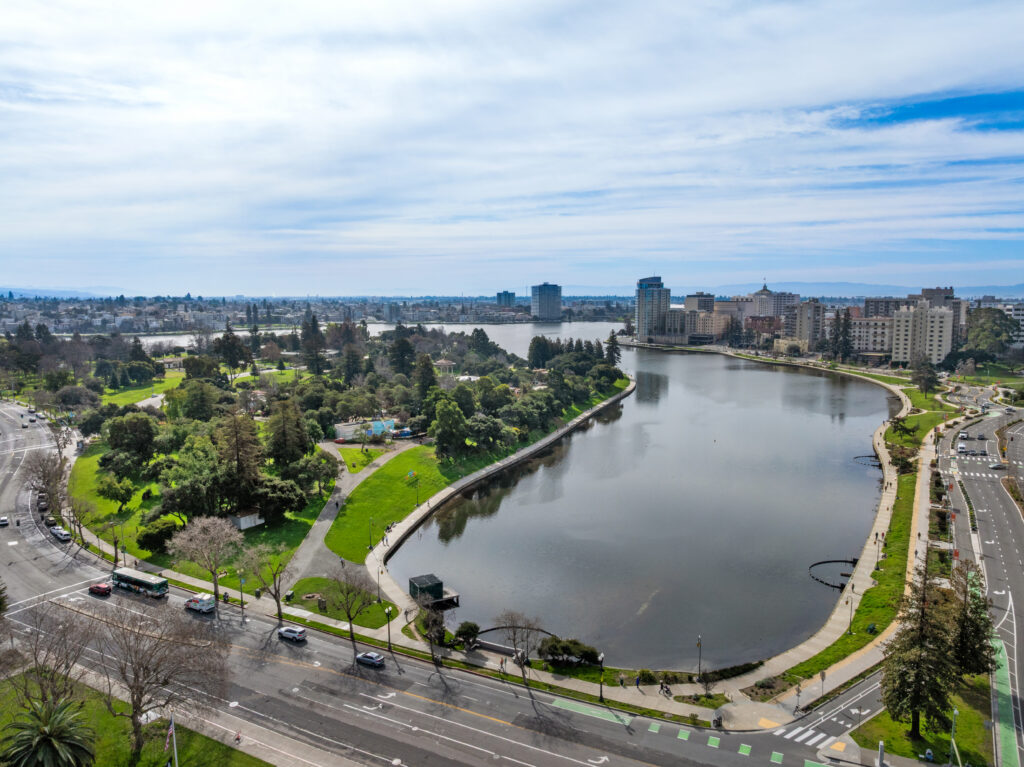
Independent living in Oakland, CA is offering a different model. At St. Paul’s Towers, residents can walk to Lake Merritt, neighborhood cafes, grocery stores, public transit, museums, parks, and cultural venues without needing to structure their entire day around driving. That accessibility does more than create convenience. It changes how people experience independence, movement, and connection within the city itself.
In many ways, communities like St. Paul’s Towers are becoming an unexpected model for what healthier, more human-centered urban neighborhoods might look like going forward.
Designing Around People Instead of Cars
Older models of senior housing often isolated residents from the surrounding community, sometimes by design and sometimes simply by default. Large campuses were built far from city centers where land was cheaper, but the tradeoff was that everyday life became dependent on transportation schedules, parking lots, and long drives to reach basic services. The physical distance from the city gradually became an emotional one as well.
That approach increasingly feels like a relic of a different era.
Many residents today want something fundamentally different. They want to remain connected to culture, movement, public life, and familiar neighborhoods as they age. They aren’t looking for quieter lives so much as easier access to the lives they already enjoy. The Lake Merritt area reflects that shift particularly well. Residents at St. Paul’s Towers live within walking distance of grocery stores, green space, public transit, restaurants, and healthcare. Daily errands become opportunities for movement and incidental interaction rather than logistical undertakings. And that type of urban design, it turns out, benefits far more than one generation.
Walkability Changes More Than Transportation
It’s tempting to think of walkability purely as a transportation issue. In practice, it shapes social life just as profoundly.
When residents regularly move through their neighborhood on foot, small interactions accumulate naturally. Familiar faces appear at coffee shops. Conversations happen near the lake. Neighbors encounter one another throughout the week in ways that simply don’t happen when everyone disappears behind a garage door and drives to their destinations. Proximity creates the conditions for community in a way that no amount of programming can fully replicate.
At Lake Merritt, residents at St. Paul’s Towers often build their daily routines around the surrounding neighborhood itself. Morning walks near the water. Lunch downtown. Cultural events at nearby theaters or museums. A quick trip to the market that doesn’t require setting aside an entire afternoon. That kind of accessibility keeps people engaged with the world around them in ways that compound positively over time.
It also preserves something that becomes increasingly valuable with age: the ability to move through your own neighborhood independently, without relying entirely on a car or a scheduled ride. Notably, younger generations are prioritizing exactly the same thing, which is part of why this model is drawing broader attention from urban planners and designers.
Independent Living Communities Are Influencing Urban Planning
Cities across the country are paying closer attention to neighborhoods like Lake Merritt because demand for connected, mixed-use living continues to grow across generations. Independent living communities offer a particularly useful lens for evaluating whether that model actually works in practice, because residents rely heavily on nearby infrastructure as part of their everyday routines rather than as an occasional amenity.
At St. Paul’s Towers, the surrounding environment supports daily life organically. Residents remain active without long commutes or extensive advance planning. Public transportation is genuinely accessible rather than theoretically available. Cultural opportunities stay integrated into ordinary routines rather than becoming special occasions that require significant effort to arrange.
Aging Well and Urban Living Are More Connected Than People Realize
There’s a persistent misconception that aging well requires stepping back from city life, trading density and activity for quiet and distance. The evidence points in a different direction.
Many seniors benefit enormously from remaining connected to vibrant urban environments. Walkable neighborhoods encourage consistent movement. Public gathering spaces reduce isolation. Access to arts, restaurants, parks, and cultural programming supports cognitive and emotional engagement long after a career has ended. The city, when it’s well-designed and genuinely accessible, turns out to be one of the most effective wellness environments available.
At communities like St. Paul’s Towers, residents remain genuinely part of Oakland rather than separated from it by distance or design. The strongest independent living communities don’t create bubbles disconnected from surrounding neighborhoods. They allow residents to continue participating in city life while reducing the specific burdens that once made urban living harder to sustain independently. That balance may ultimately represent one of the most important and transferable lessons for future city design.
What the Future of Better Cities Might Actually Look Like
Conversations about urban planning tend to focus on infrastructure, housing density, and transportation systems. These things matter enormously. But at its core, good urban design is really about the quality of daily life it makes possible.
Can people move easily and safely through their neighborhood? Do they feel connected rather than isolated? Can they access healthcare, food, culture, recreation, and community without constant logistical strain? Do public spaces invite interaction rather than simply accommodate it?
At St. Paul’s Towers, independent living exists within a neighborhood already built around accessibility, movement, and connection. Residents remain close to Oakland’s cultural energy while gaining the support and simplicity that allow them to continue living independently on their own terms.
That combination, it turns out, is exactly what a well-designed city should make possible for everyone.
FAQs
Q1. How are independent living communities influencing modern urban design? Independent living communities are helping demonstrate the practical value of walkable, mixed-use neighborhoods with integrated services. By prioritizing proximity to transit, healthcare, shopping, and cultural venues, they create compact, accessible environments that reduce car dependency and encourage genuine neighborhood integration rather than isolated, sprawling campuses.
Q2. What makes Oakland’s Lake Merritt area a model for age-friendly urban planning? The Lake Merritt area concentrates essential services, transit access, and diverse housing options in close proximity. Communities like St. Paul’s Towers place residents within walking distance of BART stations, grocery stores, medical centers, parks, and cultural resources, demonstrating in practice how layered, accessible services can create functional and genuinely livable neighborhoods.
Q3. Why do walkable neighborhoods benefit all residents, not just seniors? Walkable urban districts with accessible infrastructure serve an extraordinarily broad range of people: parents with strollers, cyclists, delivery workers, people with disabilities, and younger residents who increasingly prioritize car-free or car-light living. Design that works well for older adults tends to work well for everyone, which is why age-friendly urban planning has implications far beyond any single demographic.
Read Our Front Porch Blogs

LPGA Hall of Famer Amy Alcott Named First-Ever Front Porch Ambassador
Older Americans Month 2026: Championing Your Health at Front Porch