June 5, 2026
Why More Fathers Are Choosing Assisted Living Earlier — and Feeling More Like Themselves Because of It

A quiet but meaningful trend is reshaping how older adults and their families think about senior living. Increasingly, men are exploring an assisted living community in La Jolla, CA, not out of necessity, but out of intention. They’re making the decision while they’re still active, independent, and fully in the driver’s seat of their own lives.
At communities like Casa de Mañana, that shift is easy to see.
Residents still wake up to ocean air. They still take morning walks, spend afternoons with friends, pursue projects they care about, and maintain the everyday rhythms that make life feel like their own. What changes is something more subtle: the weight of daily responsibilities no longer accumulates the way it once did.
The Decision Is Happening Earlier — and More Deliberately
A growing number of seniors are choosing senior living before a health crisis forces the conversation. They’re visiting communities while they can still picture themselves fully engaged in the life around them, sitting outside with a cup of coffee, walking the grounds, speaking with residents who seem at ease rather than simply getting by.
They’re not evaluating care so much as evaluating quality of life. The question they’re really asking is: Could daily life actually feel lighter here?
When Retirement Becomes Maintenance
Retirement doesn’t automatically create freedom. For many, it creates a new set of demands.
The house still needs attention. Errands fill entire afternoons. Cooking for one or two people starts to feel more like obligation than pleasure. Driving becomes more taxing, especially at night or in heavy traffic. None of these shifts arrive dramatically; they accumulate quietly over time, slowly narrowing the space available for the things that actually matter.
For many seniors, the appeal of a well-designed assisted living community isn’t about what it adds so much as what it removes: the low-grade, persistent effort of managing a household alone.
Wellness Looks Different at This Stage of Life
The definition of wellness tends to evolve with age. It becomes less about performance and more about how life feels from the inside: steady movement, restful sleep, mental clarity, and enough energy to be present for the day rather than just enduring it.
At communities like Casa de Mañana, wellness is less about structured programming and more about the ordinary moments that sustain it. A walk near the water in the morning, a gentle stretching class that makes everyday movement easier, time outdoors that invites activity without pressure. These aren’t amenities bolted onto daily life; they’re woven into it.
Connection Is the Foundation of Well-Being
The strongest senior living communities understand that well-being is as much emotional as it is physical.
After retirement, loss, caregiving, or other significant life transitions, many seniors are surprised to discover how much they miss simple, consistent human connection. Not constant activity, just familiar faces, casual conversation, and a sense of belonging that builds naturally over time.
That kind of wellness can’t be manufactured on a schedule. But the right environment makes it an organic part of everyday life.
Why Place Matters More Than Most People Expect
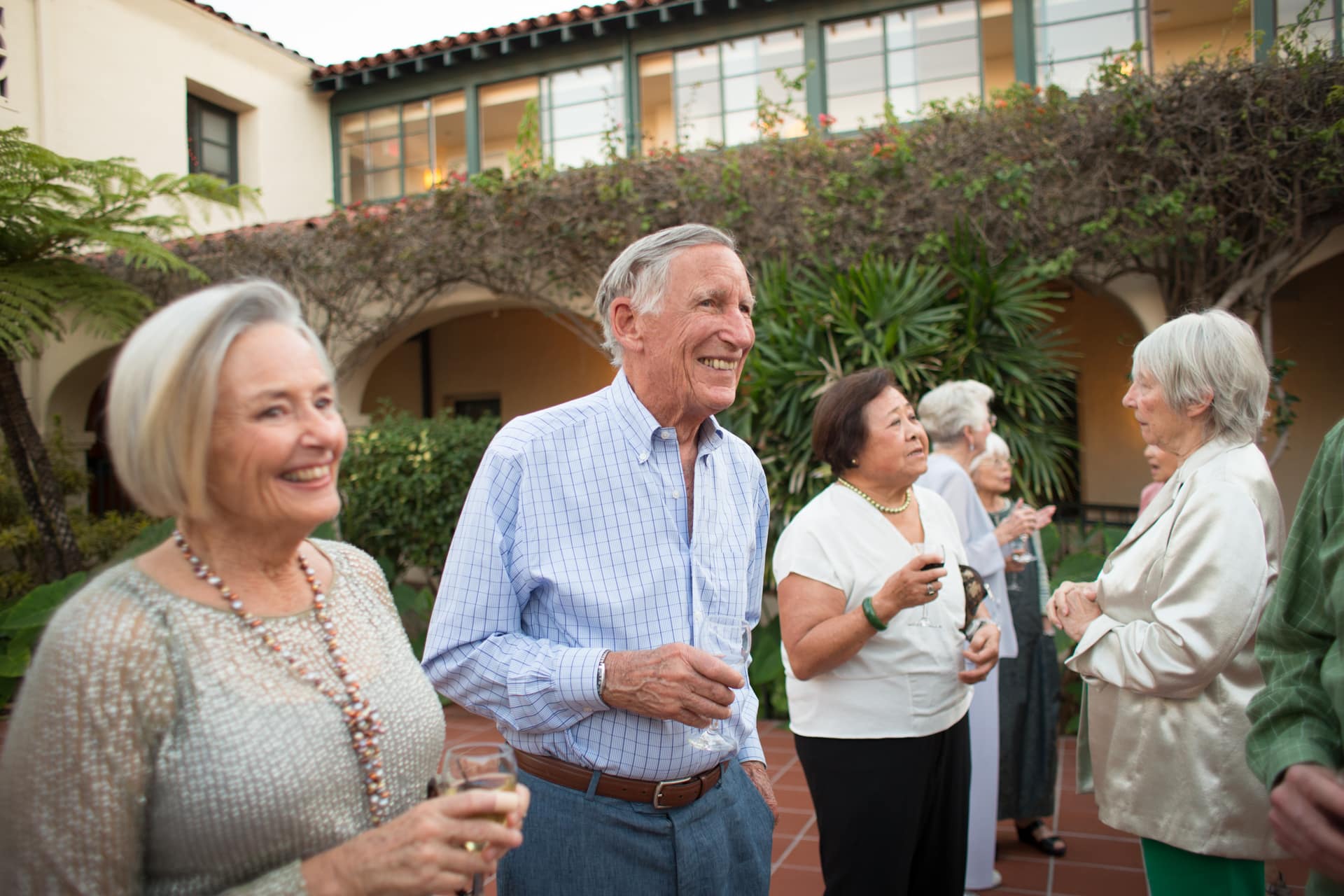
There’s something particular about the setting at Casa de Mañana. The ocean air, the quality of afternoon light, the sound of water nearby: these details aren’t incidental. They shape how residents move through the day, encouraging longer walks and quieter reflection simply by making both feel natural.
Residents spend time in courtyards, shared spaces, and outdoor areas designed for both solitude and community. Some mornings feel social; others feel reflective. Both are welcome here.
Importantly, the support available at Casa de Mañana doesn’t dominate daily life. Help is accessible when it’s needed, but personal routines remain intact. Residents continue shaping their own days, maintaining independence and privacy, while knowing that additional assistance is available if circumstances change. That balance, modest as it sounds, turns out to matter more than almost anything else.
What Fathers Are Actually Looking For
Most people aren’t searching for “senior living” in the abstract. They’re searching for a version of life that still feels like themselves.
A place where they can wake up without another household problem waiting. Where long-held routines continue undisturbed. Where staying socially connected doesn’t require effort. Where privacy is respected and support doesn’t feel like supervision.
What surprises many families is that the right assisted living community doesn’t make life smaller. It removes the things that had already begun quietly shrinking it: the isolation, the relentless upkeep, the strain of managing everything alone. What remains is often simpler and more meaningful, with more ease, more connection, and more room for the parts of life that still feel worthwhile.
For families exploring assisted living communities in La Jolla, visiting in person tends to offer the clearest sense of what daily life actually feels like. Casa de Mañana welcomes seniors and families who want to explore this next chapter thoughtfully, and entirely at their own pace.
FAQs
Q1. How does the environment affect daily life in assisted living? The physical environment plays a significant role in both emotional well-being and everyday comfort. Natural light, access to the outdoors, walkable spaces, and opportunities for spontaneous social interaction help residents feel calmer, more connected, and more engaged in their daily lives.
Q2. Does assisted living mean giving up independence? Not necessarily. Many assisted living communities are designed specifically to support independence rather than replace it. Residents continue making decisions about their own schedules, routines, social lives, and daily activities, receiving assistance only where it’s genuinely needed.
Q3. What kinds of wellness opportunities are common in assisted living communities? Wellness in senior living typically encompasses opportunities for movement, social connection, outdoor programming, emotional support, and ongoing learning. The strongest programs are less focused on rigid schedules and more on helping residents sustain the personal routines and life enrichment activities that feel most meaningful to them.
Read Our Front Porch Blogs
Front Porch in the Media: media highlights and news roundup from June-July 2026
Extending the legacy: the impact of scholarships