June 17, 2026
Independent Living Communities Are Redefining Sustainability Through Smarter Infrastructure

When residents of independent living communities in Pasadena, CA think about sustainability, they’re rarely thinking about solar panels or efficiency ratings. Those conversations belong to policy briefings and board meetings.
What residents are actually thinking about is far more immediate: whether the building stays comfortable during a heat wave. Whether the hot water is reliable. Whether utility costs remain predictable on a fixed income. Whether the environment around them supports their health rather than adding to their stress.
Sustainability, in that context, isn’t an abstract virtue. It’s a daily lived experience.
Why Energy Infrastructure Matters More in Retirement
For most people, energy systems are invisible until they fail.
The air conditioning gives out during a heat wave. Utility bills spike without warning. Indoor air quality deteriorates during wildfire season. Hot water becomes unreliable during periods of high demand. Under normal circumstances, these disruptions are inconvenient. In retirement, they carry considerably more weight.
When you spend more time at home and rely on a fixed monthly income, comfort, consistency, and predictability stop being preferences and start being necessities. Disruptions that younger adults might absorb with relative ease become meaningful quality-of-life concerns for older adults.
Investing in Infrastructure That Serves Residents
This is precisely why many senior living communities are directing investment toward infrastructure improvements focused on efficiency and long-term resilience rather than surface-level aesthetics or amenity upgrades.
In California, these changes are unfolding alongside broader statewide energy initiatives. Building standards are continuing to evolve toward lower energy consumption, improved water conservation, and more climate-resilient systems designed to reduce strain on both residents and local infrastructure. For older adults, the practical benefits of these shifts tend to matter far more than the policy discussions behind them.
What Modern Energy Upgrades Actually Look Like
Energy-efficient infrastructure can sound abstract, but most meaningful upgrades affect daily life in simple, tangible ways. Communities modernizing their systems often incorporate high-efficiency heating and cooling equipment, improved insulation and ventilation, water-saving plumbing fixtures, energy management technologies, backup power and resilience planning, updated boilers and water heating systems, and enhanced indoor air filtration.
The goal isn’t simply to reduce energy consumption. It’s to create living environments that maintain stable temperatures, support resident comfort, and reduce unnecessary operating costs over time. Modern equipment also tends to operate more predictably than aging infrastructure, which means fewer maintenance interruptions and fewer unwelcome surprises for residents.
Why These Changes Matter in Pasadena Specifically
Pasadena occupies a distinctive position when it comes to climate and energy planning, and that context matters for anyone evaluating senior living in the area.
The region contends with increasingly warm temperatures, persistent drought concerns, and seasonal air quality challenges tied to California’s ongoing wildfire conditions. These factors make energy resilience particularly relevant for older adults, who may be more sensitive to heat and environmental fluctuations than younger populations. The city has also committed to broader clean energy goals, including expanding access to carbon-free electricity and strengthening grid resilience over time. Senior living communities operating within that environment are adapting accordingly.
The Connection Between Sustainability and Wellness
One of the most persistent misconceptions about sustainable infrastructure is that its primary beneficiary is the environment. In practice, many of these improvements deliver their most immediate returns in resident health and comfort.
Better ventilation systems support healthier indoor air quality. Stable indoor temperatures reduce physical stress during periods of extreme weather. Efficient water systems improve day-to-day reliability. Thoughtful outdoor design can reduce heat retention while creating more comfortable spaces for gathering and relaxation.
Research consistently reinforces what many residents already sense intuitively: indoor environmental quality has a measurable effect on sleep, respiratory health, stress levels, and overall comfort, particularly for older adults (Baniassadi et al., 2023). The strongest senior living communities don’t treat environmental responsibility as a separate initiative with its own branding. They integrate it into the texture of how residents actually experience daily life.
What to Ask When Evaluating Independent Living Communities
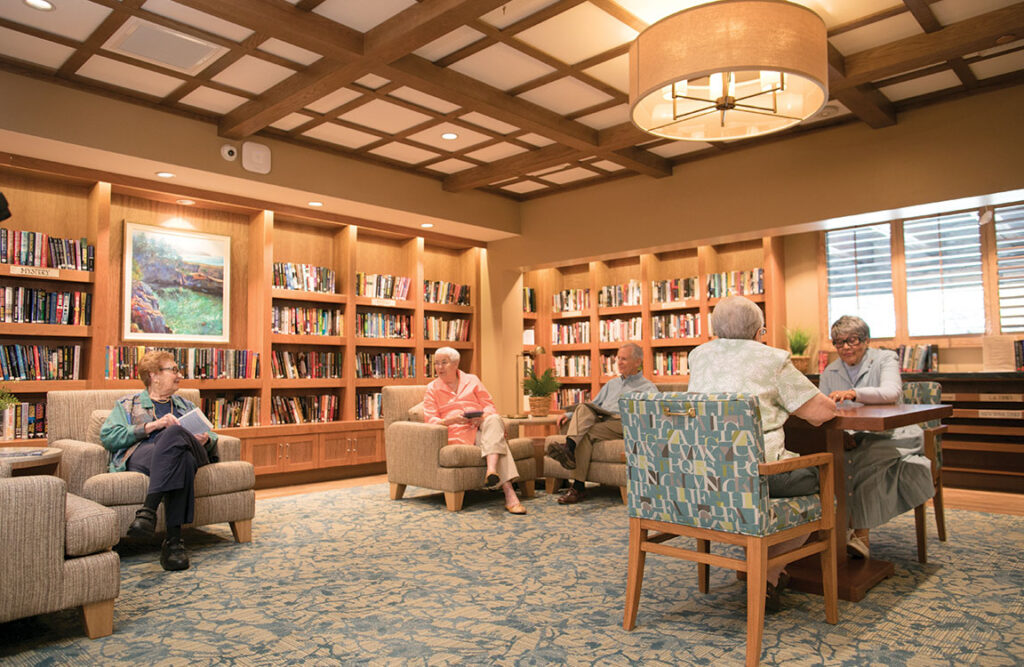
When touring independent living communities in Pasadena, it’s worth extending your questions beyond floor plans and dining options to the infrastructure that shapes everyday comfort. Consider asking how recently major systems have been updated, what measures support energy efficiency and water conservation, how the community maintains comfort during extreme heat events, and what protocols are in place for air quality management during wildfire season. It’s also worth clarifying whether utility-related costs are included in the monthly fee, and how the community approaches long-term sustainability planning.
These conversations often reveal more about a community’s operational priorities and resident-centered philosophy than any brochure will.
Retirement Living Built Around Long-Term Stability
The criteria by which older adults evaluate senior living communities are changing. Amenities and services remain important, but residents and families are increasingly asking deeper questions about resilience, operational quality, and the kind of forward-thinking infrastructure that supports comfortable, stable living over the long term.
Independent living communities in Pasadena are part of that broader evolution. For many residents, clean energy infrastructure isn’t primarily about environmental messaging or institutional values. It’s about choosing a place designed to remain comfortable, reliable, and adaptable for the years ahead.
That combination of thoughtful planning, predictable living environments, and genuine long-term stability is increasingly defining what retirement living looks like across California.
Contact us at (626) 463-5300 to schedule a tour of Villa Gardens and learn more about our lifestyle.
FAQs
Q1. Why are senior living communities investing in energy-efficient infrastructure? Many communities are modernizing their infrastructure to improve resident comfort, reduce long-term operating costs, support environmental goals, and build more resilient living environments capable of withstanding extreme weather or energy disruptions.
Q2. How do energy-efficient systems benefit older adults directly? Upgraded systems can maintain more consistent indoor temperatures, support healthier air quality, reduce utility-related expenses, and improve the reliability of heating, cooling, and hot water systems that residents depend on every day.
Q3. Why does sustainability matter in the context of independent living communities? Sustainability and resident wellness are increasingly intertwined. Efficient, well-maintained buildings tend to provide healthier indoor environments, greater climate resilience, and more predictable operational costs while also advancing broader environmental responsibility.
Read Our Front Porch Blogs

LPGA Hall of Famer Amy Alcott Named First-Ever Front Porch Ambassador

Older Americans Month 2026: Championing Your Health at Front Porch