
May 23, 2025
Four Simple Safeguards to Keep Seniors Steady
Falls pose a serious risk for our senior loved ones. The Centers for Disease Control and Prevention reported that over 25 percent of adults 65 or older fall each year, highlighting the importance of considering assisted living in Santa Rosa, CA and other safety measures.
The reality for aging family members includes increased fall risks, often compounded by chronic conditions that affect balance and stability. The good news? You can help reduce these dangers through thoughtful preparation and consistent support through simple steps.
Step 1: Recognize the warning signs before a fall happens
Prevention starts with awareness. Identifying these early indicators makes all the difference in whether your loved one lives independently or is considering assisted living in Friends House.
Subtle signs of instability or balance issues
Falls rarely happen without warning signs, though these signs often go unnoticed. Many adults over 65 require assistance due to balance disorders, which are among the most common reasons older individuals seek medical care. Watch for these warning signals:
- Dizziness or lightheadedness – Feeling like the room spins or experiencing sudden faintness
- Unsteady walking – Shuffling feet, staggering or needing support while moving
- Visual or hearing changes – Trouble seeing obstacles or hearing important sounds
- Unusual fatigue – Excessive tiredness raises fall probability
- Muscle weakness – Most concerning when noticed in the spine, hips and core
Medication side effects deserve special attention, too. Taking multiple prescriptions (particularly those causing dizziness or confusion) significantly increases fall risk. Pay attention if your loved one reaches for furniture while walking or mentions new worries about movement – these subtle clues matter.
Fear leads to activity limitation, causing muscle weakness (especially in core areas), creating actual balance problems and higher fall risk. This self-restricting behavior typically causes:
- Social withdrawal and depression
- Diminished confidence and independence
- Lower quality of daily life
Step 2: Build strength and confidence through movement
The movement works as a powerful shield against falls, forming the second tip for keeping seniors steady. Daily physical activity strengthens muscles and restores confidence, which is often shaken by fall fears—something many older adults face, including those in long-term care in Santa Rosa, CA.
Simple daily routines to improve strength
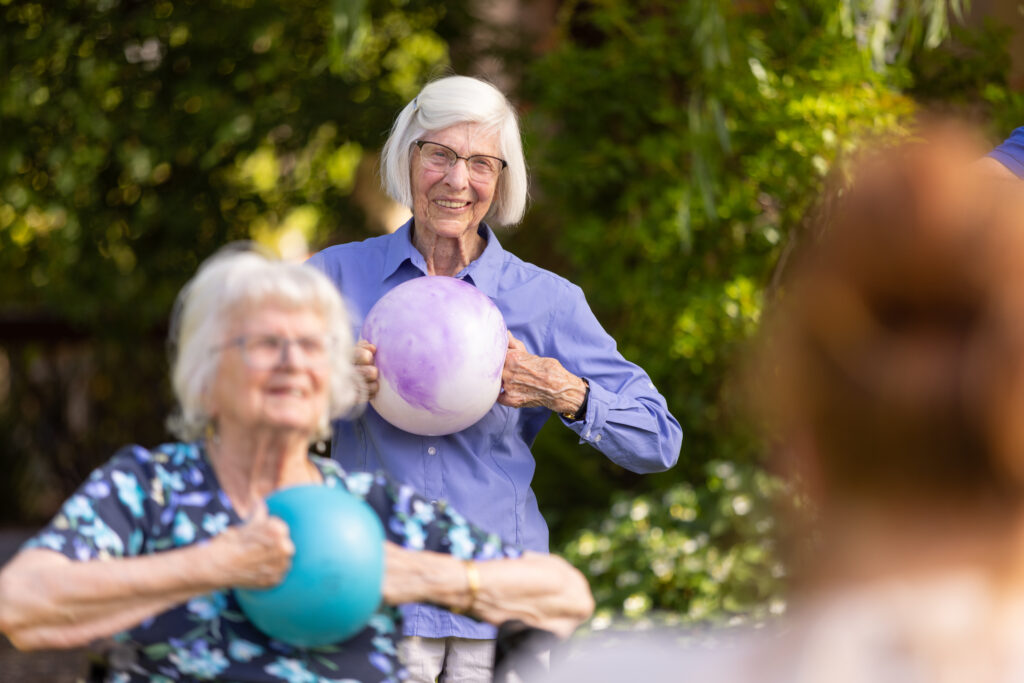
Our strength naturally fades with age, yet regular exercise effectively preserves it. Even gentle movement creates impressive results:
- Walking – Just moderate walking builds strength in the legs while enhancing blood flow
- Chair squats – These build lower body power without stressing aging joints
- Wall push-ups – A safe way to maintain upper body strength
Research shows that strength training fights osteoporosis and frailty by encouraging muscle and bone growth. Standing up without using your hands develops practical strength that helps with everyday tasks.
Balance training remains the cornerstone of fall prevention. These simple exercises need minimal equipment:
- Single-leg stands – Start holding a counter for support, then gradually try standing without help for 10-30 seconds on each leg
- Heel-to-toe walking – Take five steps forward with heel touching toe on each step
- Weight shifts – Practice gently moving weight between feet while standing securely
Step 3: Prepare the environment for safety and ease
Your home environment serves as the foundation of our third Simple Safeguard against falls. A combination of medication awareness, regular physical activity and thoughtful home adjustments offers one of the most effective ways to prevent falls among seniors.
Affordable home modifications to prevent falls
The most powerful home safety improvements tend to be the most straightforward:
- Remove tripping hazards – Clear away clutter, secure loose rugs with double-faced tape, fix wobbly floorboards and clean up spills immediately
- Install grab bars – Add these in bathrooms, beside toilets and in shower areas (professionally installed bars offer far better support than suction models)
- Improve stair safety – Ensure sturdy handrails on both sides of stairs and add non-slip treads to wooden steps
- Adapt living spaces – Think about raised toilet seats and shower chairs and keeping everyday items within easy reach
Step 4: Create a long-term support plan
Lasting protection against falls depends on consistent support—the heart of our fourth Simple Safeguard for seniors in assisted living in Santa Rosa and home settings. The most successful fall prevention approaches need ongoing attention and regular review to remain effective as your loved one’s needs evolve.
Family members often notice worrying changes before anyone else, making them essential allies in fall prevention. Your regular involvement makes a meaningful difference:
- Daily check-ins – A simple call or visit ensures your loved one has help available if a fall happens.
- Medication management – Look through all prescriptions and over-the-counter medicines with healthcare providers to find those that might cause dizziness.
- Participate in appointments – Going with seniors to doctor visits helps address sensitive topics like depression or alcohol use that could increase fall risk.
Start Steady, Stay Strong
Falls don’t need to come with aging. These Four Simple Safeguards help your senior loved ones stay independent and confident while cutting their fall risks substantially.
Successful fall prevention blends physical readiness with smart environmental changes. Minor, consistent adjustments often create surprising improvements in balance and stability. Your involvement directly impacts your loved one’s safety and quality of life.
Steps taken today prevent tomorrow’s accidents. Begin with just one safeguard, then gradually build a stronger foundation for fall prevention. Interested in exploring more support options? Call (707) 573-4508 to schedule a tour at Friends House, where thoughtful care meets comfortable living.
FAQs
Q1. What are some effective exercises to improve balance in seniors?
One of the most effective exercises for seniors to improve balance is the single-leg stand. This exercise works key muscles, enhances proprioception and can be easily adapted to individual abilities. Start by holding onto a sturdy surface, stand on one leg for as long as possible and gradually work towards holding the position without support for up to 20 seconds on each leg.
Q2. When should seniors consider moving to a retirement community?
Seniors should consider moving to a retirement community when they experience multiple falls (2 or more in 12 months), have difficulty recovering independently after a fall or require medical intervention due to falls. These situations indicate a higher risk for future incidents and may necessitate a higher level of care and support that retirement communities can provide.
Q3. How can seniors overcome the fear of falling?
Overcoming the fear of falling is crucial as it can lead to a decreased activity cycle and increased fall risk. Seniors can build confidence through regular strength and balance exercises, participating in physical therapy and learning fall recovery techniques. Creating a safer home environment and maintaining social connections also help combat this fear. Gradual exposure to activities in a controlled, safe setting can help seniors regain confidence in their abilities.
Read Our Front Porch Blogs

LPGA Hall of Famer Amy Alcott Named First-Ever Front Porch Ambassador

Older Americans Month 2026: Championing Your Health at Front Porch